Retrospective Regularization of Exempt Status for Provident Fund Trusts

Provisions for Amnesty have been introduced as a transitional measure in the Employees’ Provident Fund (EPF) Scheme 2026, notified on 29.06.2026. Such provisions are a one-time opportunity for regularisation of exemption status of Provident Fund (PF) Trusts that are recognized under the Income Tax Act, 1961 (43 of 1961), but do not have a formal exemption order granted under section 17 of the Employees’ Provident Funds and Miscellaneous Provisions (EPF&MP) Act, 1952 or section 143 of the Code on Social Security (CoSS), 2020.

The operational guidelines for Amnesty, including manner of application, procedural requirements, etc. were provided for in the detailed circular issued on 11.07.2026. The Amnesty provisions are valid for a period of six months from the date of notification i.e. up to 28.12.2026. Besides retrospective regularization of exempt status, other key benefits that will accrue to PF Trusts include waiver of certain requirements like minimum employee headcount, corpus size and 3-year compliance rule that are under the CoSS, 2020. Post regularization on retrospective basis, an establishment may choose to comply either as an exempt or an unexempt establishment.

The Employees’ Provident Fund Organization (EPFO) is making all-out efforts to ensure that prospective applicants are properly made aware of the Amnesty provisions, and through its field offices are properly guided in the entire process. As part of the outreach drive, engagement with various stakeholders is currently on. EPFO has reached out to professional bodies like the Institute of Chartered Accountants of India (ICAI), whose members (CAs) undertake statutory or Income Tax audit of several establishments including in many cases where such establishments have formed PF Trust Funds and are in a good position to identify PF Trusts that can potentially avail the Amnesty scheme. ICAI has been requested to circulate the Amnesty provisions among its members so as to elicit good response from PF Trusts to the Scheme. Besides the above, EPFO field offices like Zonal Office UP and Zonal Office Kolkata have conducted seminars/ workshops with stakeholders.

Additionally, EPFO has reached out to the Income tax department seeking details of PF Trusts recognized under the Income Tax Act, requesting for undertaking corresponding check of an establishment’s status of coverage and exemption under the EPF&MP Act, 1952 or CoSS, 2020 before granting recognition under the IT Act, or withdrawing of existing recognition of PF Trusts which do not have formal exemption order from EPFO.

PF Trusts of establishments may apply for Amnesty scheme as per details outlined in the EPFO circular dated 11.07.2026 (available on EPFO website: https://www.epfo.gov.in).

Enter the Digital Shram Sankalp Hackathon: Submit Your Ideas by Sept 18

The Ministry of Labour & Employment had initiated the nationwide Ideation Hackathon, “Digital Shram Sankalp: Reimagining India’s Labour Ecosystem with AI”, on 5 August 2026, inviting innovative and technology driven ideas to strengthen India’s digital labour ecosystem. In view of the encouraging response and to provide further opportunity to interested participants, the last date for submission of entries has now been extended up to 18 September 2026. Hosted on the Innovate India platform of MyGov, the Hackathon invites innovative, implementable and scalable ideas for strengthening the Ministry’s key digital platforms, namely eShram, National Career Service (NCS) and Shram Suvidha Portal 2.0.

Participants may propose solutions using emerging technologies such as Artificial Intelligence, Data Analytics, Digital Public Infrastructure and interoperable digital systems. The solutions are expected to enhance employment services, worker welfare, ease of compliance, platform accessibility, user experience, data quality, system integration and citizen centric service delivery. The Hackathon features 12 problem statements covering different aspects of the Ministry’s digital labour ecosystem. It has received an encouraging response so far, with around 1,000 users submitting 1,368 ideas across the problem statements.

The Hackathon provides students, start-ups, innovators, entrepreneurs, institutions, researchers and technology professionals with an opportunity to apply their expertise to national scale digital platforms serving workers, jobseekers, employers and establishments across the country.

The top five ideas under each problem statement will receive cash prizes, while all eligible participants will be awarded a Digital Certificate of Participation by the Ministry of Labour & Employment. Winning participants may also be invited to present their proposals before senior officers of the Ministry. Promising ideas may be considered for pilot implementation and further development, with due recognition and credit.

The extended timeline provides participants with additional time to refine and submit their ideas. Registered users who have not yet submitted their entries, as well as other eligible individuals, are encouraged to utilise this opportunity and submit their ideas by 18th September 2026 at: https://innovateindia.mygov.in/digital-shram-sankalp.

DGFT Enables Automated Issuance of Free Sale and Commerce Certificates

In continuation with the initiatives taken by the Government from time to time to promote Ease of Doing Business for the exporting community, the Directorate General of Foreign Trade (DGFT) has enabled automated issuance of Free Sale and Commerce Certificates (FSC) on the DGFT portal. These Certificates are issued to exporters, under Foreign Trade Policy, for items which are not covered under the Drugs & Cosmetics Act, 1940. At present, such certificates are issued by Regional Authorities (RAs) of DGFT after scrutiny and verification.

Eligible applications will now be considered for automatic issuance in accordance with the prevailing framework, without being routed for manual scrutiny. The automated mechanism is expected to reduce processing time for a significant category of FSC applications and lower the compliance burden associated with the earlier manual process.

Applications requiring verification, or those not meeting the automated processing parameters, may continue to be routed to the concerned RA for manual processing.

Certain auto-approved applications may also be subsequently flagged to the concerned RA for review under the system’s risk management parameters.

The measure is expected to reduce avoidable manual intervention, improve the predictability of processing and facilitate faster issuance of FSCs for eligible exporters, while retaining appropriate verification and oversight for applications requiring scrutiny. By strengthening automated, rule-based processing and applying risk-based review, the initiative is expected to make the issuance of Free Sale and Commerce Certificates more efficient, transparent and predictable for exporters and administering authorities.

MCA Extends Companies Compliance Facilitation Scheme till 15 September 2026

The Ministry of Corporate Affairs (MCA) has extended the validity of the Companies Compliance Facilitation Scheme, 2026 (CCFS-2026) up to 15 September 2026, providing additional time to companies for completing their pending statutory filings.

The extension has been announced through General Circular No. 04/2026 dated 31 August 2026, issued by the Ministry of Corporate Affairs. The decision has been taken in view of representations received from various stakeholders seeking further continuation of the compliance facilitation window.

The Companies Compliance Facilitation Scheme, 2026 (CCFS-2026) was originally introduced by the Ministry through General Circular No. 01/2026 dated 24 February 2026 with the objective of providing companies an opportunity, inter alia, to complete their pending statutory filings. The Scheme was initially operational up to 15 July 2026.

Subsequently, the Ministry extended the last date of the Scheme up to 31 August 2026 through General Circular No. 03/2026 dated 8 July 2026. Following further representations from stakeholders, the competent authority has now decided to extend the validity of CCFS-2026 for another period, up to 15 September 2026.

The Ministry has clarified that all other terms and conditions of the Companies Compliance Facilitation Scheme, 2026 will remain unchanged. Accordingly, eligible companies may utilise the extended period in accordance with the existing provisions and conditions of the Scheme.

The latest extension is expected to provide additional facilitation to companies that are in the process of completing pending statutory filings and enable them to make use of the compliance opportunity available under CCFS-2026 before the revised deadline of 15 September 2026.

The circular has been issued with the approval of the competent authority.

Monthly Review of Accounts of Union Government of India up to July 2026

The Monthly Accounts of the Union Government of India upto the month of July, 2026 has been consolidated and reports published. The highlights are given below: –

The Government of India has received ₹13,06,709 crore (35.8% of corresponding BE 2026-27 of Total Receipts) upto July, 2026 comprising ₹8,44,560 crore Tax Revenue (Net to Centre), ₹4,23,013 crore of Non-Tax Revenue and ₹39,136 crore of Non-Debt Capital Receipts. ₹3,72,354 crore has been transferred to State Governments as Devolution of Share of Taxes by Government of India during this period which is ₹56,190 crore lower than the previous year.

Total Expenditure incurred by Government of India is ₹17,61,853 crore (32.9% of corresponding BE 2026-27), out of which ₹13,11,218 crore is on Revenue Account and ₹4,50,635 crore is on Capital Account. Out of the Total Revenue Expenditure, ₹4,26,566 crore is on account of Interest Payments and ₹1,53,513 crore is on account of Major Subsidies.

Commerce Secretary Shri Rajesh Agrawal Co-Chairs India-Brazil Trade Monitoring Meeting

The 8th Meeting of the India-Brazil Trade Monitoring Mechanism (TMM) was held in Brasília, Brazil. The meeting was co-chaired by Commerce Secretary, Ministry of Commerce & Industry, Shri Rajesh Agrawal, and Secretary of Foreign Trade, Ministry of Development, Industry, Commerce and Services (MDIC), Ms. Tatiana Lacerda Prazeres. The meeting, building on the strong political momentum led by Hon’ble Prime Minister Shri Narendra Modi and President Luiz Inácio Lula De Silva, reflected on the strong institutional framework underpinning the India-Brazil Strategic Partnership and the shared commitment of both sides to deepen strategic and economic ties.

Commerce Secretary also met Minister of Development, Industry, Commerce and Services, Government of Brazil, Mr. Marcio Elias Rosa, to discuss further deepening bilateral trade and investment ties and enhancing economic cooperation in priority sectors. Bilateral trade between India and Brazil has shown consistent growth, reaching USD 15.07 billion in 2025–26. Recognising the complementarities between the two economies, both sides reaffirmed their shared objective of expanding bilateral trade to USD 30 billion by 2030 through a more diversified, balanced and sustainable partnership, particularly in pharmaceuticals, chemicals, engineering goods and machinery.

During the meetings, both sides reviewed progress on the India–MERCOSUR Terms of Reference. The India–MERCOSUR Preferential Trade Agreement offers considerable scope for expansion and modernisation. With India-MERCOSUR bilateral trade reaching USD 20.84 billion in 2025, both sides committed to early finalisation of the Terms of Reference.

Significant progress was also made in facilitating market access for Indian pharmaceutical products. The CDSCO–ANVISA MoU signed in February 2026 provides an important institutional foundation for deeper cooperation in health and pharmaceuticals. India emphasised the need for supporting more predictable regulatory pathways and facilitating greater market access. India can contribute to the availability of affordable, quality medicines and strengthen efforts towards more accessible healthcare.

On agriculture, the discussions advanced work on priority phytosanitary requests on key products of interest, while laying out a clear agenda to take forward the technical processes towards reciprocal market access concessions in a time-bound manner. The discussions also noted the encouraging progress on mutual recognition of Electronic Certificates of Origin and on Cooperation in MSMEs, Entrepreneurship and Crafts, terming them significant steps towards greater trade facilitation and easing barriers to trade for business-to-business engagement.

Both sides reaffirmed close coordination on multilateral issues, including under BRICS, the G20 and the WTO, in support of an open, inclusive and development-oriented multilateral system. India appreciated Brazil’s engagement in advancing the Strategy for BRICS Economic Partnership 2030 and the GVC Action Plan 2026–2030. Brazil congratulated India on its work during its BRICS Presidency, particularly initiatives such as the BRICS Startup Knowledge Hub and BRICS Business Incubator.

As a part of the bilateral engagement, an India-Brazil High Level Business Reception was also organised in Brasilia with participation from leading business representatives and industry stakeholders from both countries. Commerce Secretary led the Indian business delegation comprising over 25 Indian businesses, including representatives from Kirloskar Group, UPL, Aditya Birla Group, amongst others. The Business Reception served as an important platform for exploring new avenues of collaboration in sectors such as critical minerals, renewable energy, agri-business, infrastructure, pharmaceuticals, digital services, logistics and advanced manufacturing. Both sides also welcomed the establishment of ApexBrasil office in New Delhi which will strengthen business-to-business linkages and greater flow of Brazilian investment in India. India and Brazil have a long-standing relationship characterised by mutual trust, democratic values, and growing economic engagement. The visit further boosted the momentum in bilateral ties and reaffirmed the shared commitment of both countries towards building a stronger and future-oriented economic partnership

Pradhan Mantri Jan Dhan Yojana: 12 Years of Financial Inclusion Impact

Launched by Prime Minister Shri Narendra Modi as one of his very first programmes on 28th August 2014, the Pradhan Mantri Jan Dhan Yojana (PMJDY) has completed 12 years. These 12 years of PMJDY have witnessed a transformation in India’s financial landscape, and the scheme has become a torchbearer for financial inclusion worldwide. As the world’s largest financial inclusion initiative, PMJDY continues to redefine access to banking for all Indians.

Expanding Financial Inclusion:

The Ministry of Finance remains committed to supporting marginalised and economically disadvantaged sectors through robust financial inclusion schemes and outreach. PMJDY ensures that every unbanked adult has access to a basic bank account—with no minimum balance requirement and no maintenance charges.

Each account comes with a free RuPay debit card, offering an accident insurance cover of ₹2 lakh, encouraging digital transactions and financial security. Account holders are also eligible for an overdraft facility of up to ₹10,000, providing a safety net during emergencies.

PMJDY accounts have also played a pivotal role in extending life and accident insurance to millions of workers in the unorganised sector, through Jan Suraksha schemes, viz. PM Jeevan Jyoti Bima Yojana and PM Suraksha Bima Yojana.

On the occasion, Union Minister of State for Finance, Shri Pankaj Chaudhary, said, “On 28th August 2014, the Hon’ble Prime Minister inaugurated the National Mission on Financial Inclusion, popularly known as Pradhan Mantri Jan Dhan Yojana (PMJDY). Today, I am happy that Pradhan Mantri Jan Dhan Yojana (PMJDY) is celebrating its 12th anniversary. We should not see PMJDY just in the light of the opening of more than 59 crore accounts, garnering a deposit balance of ₹3.17 lakh crore, or the issuance of 41.29 crore free-of-cost RuPay cards, but in its transformation of the banking and financial landscape of the country, where the delivery of financial services to the last person in society—the poorest of the poor—has been made possible without delay or the involvement of middlemen.”

Under PMJDY, 78% of the accounts have been opened in rural or semi-urban areas, and approximately 56% of accounts are owned by women, depicting the priority of the scheme, which was to bring the underprivileged living in far-flung areas of the country into the formal financial sector.

PMJDY has empowered millions, particularly the marginalized sections, to access banking and financial services to improve their socio-economic conditions. Account ownership has enabled the common man to have insurance and pension coverage. Through relentless saturation drives across every state and district, we have moved towards near-universal coverage of bank accounts and steadily widened the reach of insurance and pension schemes to those who need them most.

On the occasion of the 12th anniversary, I appreciate the efforts of bankers and business correspondents deployed throughout the country in taking the PMJDY scheme to the common man and making it a grand success.”

The JAM Trinity: A Game-Changer:

The Jan-Dhan–Aadhaar–Mobile (JAM) trinity, with PMJDY at its core, has proven to be a diversion-proof mechanism for the direct delivery of financial assistance. Through JAM, the government has successfully transferred welfare benefits directly into the bank accounts of the underprivileged, eliminating intermediaries and delays.

Milestones and Achievements:

a. PMJDY Accounts: 59.09 crore (As on 19th August ’26)

As on 19th August ’26, the total number of PMJDY accounts stands at 59.09 crore; 55.7% (32.92 crore) of Jan Dhan account holders are women, and 77.8% (45.95 crore) of Jan Dhan accounts are in rural and semi-urban areas.

b. Deposits under PMJDY Accounts – ₹3.17 lakh crore (As on 19th August ’26)

Total deposit balances under PMJDY accounts stand at ₹3,16,514 crore. Deposits have increased about 12.8 times, while the number of accounts has increased 2.3 times in the last 12 years (Aug ’26/Aug ’15).

c. Average Deposit per PMJDY Account – ₹5,356 (As on 19th August ’26)

The average deposit per account is ₹5,356 as on 19.08.2026. The average deposit per account has increased 3.4 times in the last 12 years (Aug ’26/Aug ’15). The increase in the average deposit is another indication of the increased usage of accounts and the inculcation of saving habits among account holders.

d. RuPay Cards Issued to PMJDY Account Holders: 41.29 crore (As on 19th August ’26)

41.29 crore RuPay cards have been issued to PMJDY account holders. The number and usage of RuPay cards have increased over time.

PMJDY’s success is driven by its mission-mode approach, regulatory backing, public-private partnerships, and the integration of digital public infrastructure like Aadhaar for biometric verification. It continues to be the first step towards financial inclusion, with further progress being achieved by enabling savings and credit access for those previously excluded from formal finance. With visible saving patterns, account holders are now eligible for loans, including MUDRA loans, empowering individuals to grow their incomes and build financial resilience.

As PMJDY enters its 13th year, it continues to be a beacon of inclusive growth, digital innovation, and economic empowerment. Its enduring success reflects India’s commitment to ensuring that no citizen is left behind in the journey towards financial well-being.

SIDBI Organizes Conclave on Expanding RRB MSME Co-Lending

The Small Industries Development Bank of India (SIDBI) organized a conclave of the Heads of Regional Rural Banks on expanding the SIDBI-RRB MSME Co-Lending arrangement on 25th August 2026 in New Delhi. The Conclave chaired by Shri Sanjay Lohiya, Secretary, Department of Financial Services was attended by Shri Manoj Mittal, CMD, SIDBI; senior officials from DFS, SIDBI and NABARD; and Chairmen of all 28 Regional Rural Banks.

During the Conclave, Secretary, DFS, emphasized the importance of scaling up MSME lending in rural and semi-urban areas. The proposed arrangement synergizes the strengths of SIDBI, which understands the credit needs of MSMEs, and RRBs, which have an excellent reach across the smaller towns and villages of the country. RRBs will also be able to achieve their goal of diversifying their loan portfolios by focusing on MSME lending, and rule engine-based underwriting is also expected to help them maintain good asset quality.

Additional Secretary, DFS, while addressing the conclave, indicated the importance of MSME cluster data for a focused approach to reaching out to a large number of MSMEs. RRBs should contribute towards making the country a next-generation manufacturing hub and also take an active part in Rozgar Melas conducted by state governments to disseminate financial awareness among MSMEs. Joint Secretary, DFS, suggested that RRBs make MSME lending through this Co-Lending arrangement an important target for branches. CMD, SIDBI, also urged the RRBs to come forward and make the arrangement a success.

The Co-Lending Origination Platform developed by SIDBI is an end-to-end digital platform providing a faster and paperless credit journey, resulting in the quick sanction and disbursement of loans. Loan applicants will be informed of their in-principle sanctions within a very short turnaround time once all the details are provided through the application portal. The digital documentation and disbursement process also ensure that customers receive loan disbursements directly into their accounts without the need to visit branches at any stage of the process. With encouraging outcomes from the pilot implementation at three RRBs, the proposed expansion of this Co-Lending programme to more RRBs is expected to significantly address the credit needs of borrowers, especially in the Micro and Small segments, in rural and semi-urban areas.

Service Producer Price Indices Q1 2026-27 Overview

The Provisional Estimates of Service Producer Price Indices for Q1 of FY 2026-27 and Final Estimates for Q4 of FY 2025-26 are as below: –

S. No.Service PPIQ4: 2025-26 (F)Q1: 2026-27 (P)
1.Securities Transaction Service Price Index91.789.9
2.(a)Banking Service Price Index100.5100.9
2.(b)Banking Service Contribution Index131.5134.8
3.Management of Pension Funds Service Price Index103.8113.3
4.Insurance Service Price Index102.9102.9
5.Telecom Service Price Index112.2112.2
6.Railway Service Price Index103.3103.4
6.(a)Railway Freight Service Price Index103.2103.3
6.(b)Railway Passenger Service Price Index103.5103.5
7.Air (Passenger) Service Price Index106.9126.4

(P)-Provisional, (F)-Final

Note: Weights have not been assigned to aforementioned services as these services do not cover the entire service sector. However, sub-service level weights under each service, have been computed using the data of FY 2022-23 for arriving at the PPI of respective Services.

  1. The Service Producer Price Indices (Base Year 2022-23) and the Year-on-Year (YoY) inflation rate of the seven services for last four quarters are given at Annexure.
  2. Quarterly Service PPIs from Q1 of FY 2023-24 to Q1 of FY 2026-27 are available at (https://eaindustry.nic.in/download_data_2223.asp)

Service PPIs for seven services for Q2 of FY 2026-27 will be released on Wednesday, 25th November 2026.

Annexure

Service PPIs (Base Year 2022-23) for last four Quarters

S. No.Service PPIQ2: 2025-26 (F)Q3: 2025-26 (F)Q4: 2025-26 (F)Q1: 2026-27 (P)
1.Securities Transaction Service Price Index92.489.291.789.9
2.(a)Banking Service Price Index103.6102.2100.5100.9
2.(b)Banking Service Contribution Index129.7132.0131.5134.8
3.Management of Pension Funds Service Price Index108.4106.3103.8113.3
4.Insurance Service Price Index102.7102.0102.9102.9
5.Telecom Service Price Index111.6112.2112.2112.2
6.Railway Service Price Index101.3102.6103.3103.4
6.(a)Railway Freight Service Price Index101.3103.2103.2103.3
6.(b)Railway Passenger Service Price Index101.3101.3103.5103.5
7.Air (Passenger) Service Price Index94.3107.3106.9126.4

(P)-Provisional, (F)-Final

Year-on-Year Inflation Rate for last four Quarters for Service PPIs (Base Year 2022-23)

S. No.Service PPIQ2: 2025-26 (F)Q3: 2025-26 (F)Q4: 2025-26 (F)Q1: 2026-27 (P)
1.Securities Transaction Service Price Index-5.81-4.800.55-1.32
2.(a)Banking Service Price Index-2.81-4.31-4.10-3.35
2.(b)Banking Service Contribution Index2.132.563.306.90
3.Management of Pension Funds Service Price Index1.59-0.56-0.765.20
4.Insurance Service Price Index0.10-3.040.680.98
5.Telecom Service Price Index0.450.990.990.72
6.Railway Service Price Index-0.200.491.181.27
6.(a)Railway Freight Service Price Index-0.880.000.000.10
6.(b)Railway Passenger Service Price Index1.301.303.503.50
7.Air (Passenger) Service Price Index–––31.94

CBN Busts Inter-State Heroin Syndicate in ‘Op Black Hawk’: 18.6 kg Seized

In a major breakthrough against drug trafficking, officers of the Central Bureau of Narcotics (CBN) MP and UP Units successfully executed ‘Operation Black Hawk’, seizing total 18.64 kg crude heroin in back-to-back operations near Lucknow (U.P.). Three key members of an inter-state trafficking network have been arrested. The contraband originated from North-Eastern State and were being trafficked for consumption in Uttar Pradesh.

Developing first precise inputs from the CBN MP Unit regarding drug movement from the North-East region to Lucknow, joint teams from CBN MP and UP units established a strategic cordon along the Sultanpur–Lucknow Highway on the intervening night of August 20–21, 2026.

Following continuous tracking from at different Toll Plazas, the strike team intercepted an Assam-registered Hyundai Creta at near Lucknow on August 21. The vehicle was found empty and the occupants claimed innocence. Operational officers grew suspicious when the vehicle’s occupants on questioning disclosed to have refueled four times within a span of just 500 km. A physical tapping test of the fuel tank confirmed a hollow acoustic anomaly. At the CBN Office in Lucknow, technical assistance was utilized to dismantle the fuel tank, exposing a specially fabricated compartment holding 25 waterproof packages containing 16.46 kg of crude heroin. Both suspects were arrested.

In another (second) actionable intelligence developed by the CBN UP Unit indicated a heavy truck transporting contraband along the Siliguri–Lucknow corridor. CBN teams tracked the vehicle across multiple toll plazas before intercepting it near Barabanki. A systematic physical search revealed 2.16 kg crude heroin concealed inside a specially constructed secret chamber within the vehicle’s body frame. One suspect was arrested.

All three suspects have been booked under stringent provisions of the Narcotic Drugs and Psychotropic Substances (NDPS) Act, 1985. Both transport vehicles and the entire contraband consignment have been confiscated. Comprehensive follow-up financial and logistical investigations are currently underway to trace upstream suppliers in the North-East and dismantle connected downstream distribution channels.

Key seizures at a glance

  • Total Seized Drugs: 18.64 kg (16.48 kg from a Car and 2.16 kg from a heavy commercial vehicle)
  • Vehicles Impounded: one Assam-registered Hyundai Creta, one Heavy Commercial Truck.
  • Total Arrests: 3 Suspects (arrested under the NDPS Act, 1985)
  • Concealment Methods: Fabricated fuel tank cavity and secret body chambers in Truck.

APEDA Act Update: New Adjudication Rules Set Strict 6-Month Timeline for Penalties

The Government has notified the Agricultural and Processed Food Products Export Development Authority (Adjudication of Penalties) Rules, 2026, providing a detailed procedural framework for adjudication of penalties and disposal of appeals under the Agricultural and Processed Food Products Export Development Authority Act, 1985.

The Rules have been notified by the Ministry of Commerce and Industry through G.S.R. 741(E) dated 19 August 2026 and have come into force from the date of their publication in the Official Gazette.

The Rules have been framed in exercise of the powers conferred by clauses (ma) and (mb) of sub-section (2) of Section 32, read with Section 25A of the APEDA Act, 1985.

Adjudicating Officer to conduct inquiry into alleged contraventions

Under the new Rules, an Adjudicating Officer, appointed by the Chairman under Section 25A of the APEDA Act, will conduct proceedings relating to adjudication of penalties in respect of specified contraventions.

Upon receipt of a complaint regarding an alleged contravention, the Adjudicating Officer will issue a show-cause notice in Form-I, requiring the concerned person to explain why an inquiry should not be initiated.

The period provided for submitting a response to the show-cause notice cannot be less than seven days from the date of service of the notice. The notice is also required to clearly indicate the nature of the alleged contravention.

Opportunity of hearing and submission of evidence

After considering the response submitted by the concerned person, the Adjudicating Officer may proceed with an inquiry where considered necessary.

The person against whom proceedings are initiated may appear personally or through a duly authorised representative and will be given an opportunity to submit documents and evidence relevant to the inquiry.

Where necessary, the hearing may be adjourned to another date, subject to the conditions prescribed under the Rules. Such adjournment is to be not later than 15 days from the first date of hearing and up to a maximum of three dates.

The Rules further provide that, while taking evidence, the Adjudicating Officer will not be bound by the provisions of the Bharatiya Sakshya Adhiniyam, 2023.

Inquiry may proceed in absence in specified circumstances

Where a person fails, neglects or refuses to appear before the Adjudicating Officer despite being required to do so, the officer may proceed with the inquiry in the person’s absence after recording reasons.

After considering the available evidence, if the Adjudicating Officer is satisfied that a contravention has been committed, a penalty may be imposed through a written order under the provisions of the APEDA Act.

Every such order must specify the relevant provision of the Act that has been contravened and record the reasons for imposition of the penalty.

A copy of the order and other proceedings is required to be provided free of cost to the person against whom the inquiry was conducted.

Adjudication proceedings to be completed within six months

The Rules prescribe a defined timeline for adjudication proceedings. The Adjudicating Officer is required to complete the proceedings within six months from the date of issuance of notice to the person concerned.

The Rules also prescribe multiple modes for service of notices and orders, including delivery to the person or authorised representative, electronic mode, or speed post with registration and proof of delivery.

Where service cannot be effected through the prescribed methods, the notice or order may be affixed on a conspicuous part of the premises in accordance with the Rules.

Right of appeal against Adjudicating Officer’s order

The Rules provide an appellate mechanism for persons aggrieved by an order of the Adjudicating Officer.

An aggrieved person may file an appeal in Form-II before the Appellate Authority within 30 days from the date of receipt of the adjudication order.

The Appellate Authority may, however, admit an appeal after expiry of the 30-day period if satisfied that the appellant was prevented by sufficient cause from filing the appeal within the prescribed time.

The appeal must be accompanied by a copy of the adjudication order, a clear statement of the facts being challenged, grounds of appeal and the relevant provisions of the Act.

Defects in appeal may be rectified within 15 days

Where an appeal is found to be defective upon scrutiny, the Appellate Authority will inform the appellant of the deficiencies and provide 15 days for rectification.

If the appellant fails to correct the deficiencies within the prescribed period, the Appellate Authority may decline to register the appeal by recording reasons in writing and communicate the decision to the appellant within the stipulated period.

Appellate Authority to dispose of appeals within 60 days

Upon admission of an appeal, a copy will be served on the concerned party along with a notice requiring submission of a reply within a period not exceeding 30 days.

The Appellate Authority may call for records relating to the proceedings from the concerned Adjudicating Officer and, after providing the parties an opportunity of being heard, pass such orders as it considers reasonable.

The Rules stipulate that the Appellate Authority shall dispose of an appeal within 60 days from the date of its filing.

Provision for extension of prescribed timelines

The Adjudicating Officer or the Appellate Authority may extend a period specified under the Rules where there is a reasonable cause for delay or failure to act, subject to reasons being recorded in writing.

Every order passed under the Rules is required to be signed and dated and communicated to all concerned parties.

Further, all sums realised by way of penalties under the Rules will be credited to the Consolidated Fund of India.

Standardised Forms prescribed for show-cause notice and appeal

The Rules also prescribe standard formats to ensure procedural consistency.

Form-I has been prescribed for issuance of a show-cause notice in respect of alleged contraventions of the APEDA Act, while Form-II has been prescribed for filing an appeal against the order of the Adjudicating Officer.

The notification establishes a structured and time-bound framework for adjudication of penalties and appeals under the APEDA Act, including clear provisions relating to notice, opportunity of hearing, evidence, passing of reasoned orders and appellate review.

Amendment to Customs Notification G.S.R. 752(E) Explained

G.S.R. 752(E).— In exercise of the powers conferred by sub-sections (1) and (5) of section 9A of the Customs Tariff Act, 1975 (51 of 1975) read with rules 18 and 23 of the Customs Tariff (Identification, Assessment and Collection of Anti-dumping Duty on Dumped Articles and for Determination of Injury) Rules, 1995, the Central Government hereby makes the following further amendment in the notification of the Government of India, in the Ministry of Finance (Department of Revenue) No. 47/2021-Customs (ADD), dated the 26th August, 2021, published in the Gazette of India, Extraordinary, Part II, Section 3, Sub-section (i), vide number G.S.R. 590(E), dated the 26th August,
2021, namely:-

In the said notification, in paragraph 3, for the figures, letters and word “25th November, 2026”, the figures, letters and word “25th February, 2027” shall be substituted.

Note: The principal notification No. 47/2021-Customs (ADD), dated the 26th August, 2021, was published in the Gazette of India, Extraordinary, Part II, Section 3, Sub-section (i), vide number G.S.R. 590(E), dated the 26th August, 2021 and was last amended vide notification No. 09/2026-Customs (ADD), dated the 22nd May, 2026, published in the Gazette of India, Extraordinary, Part II, Section 3, Sub-section (i), vide number G.S.R. 387(E), dated the 22nd May, 2026.

Finance Ministry Allows 10 Lakh MT Duty-Free Raw Sugar Imports Till 31st October

G.S.R. 755(E).— In exercise of the powers conferred by sub-section (1) of section 25 of the Customs Act, 1962 (52 of 1962), the Central Government, on being satisfied that it is necessary in the public interest so to do, hereby exempts the goods of the description specified in column (3) of the Table below, falling under the tariff heading of the First Schedule to the Customs Tariff Act, 1975 (51 of 1975) (hereinafter referred to as the ‘Customs Tariff Act’), as specified in the corresponding entry in column (2) of the said Table, in such quantity of total imports of such goods, as specified in column (4) below (herein after referred to as the ‘Tariff Rate Quota (TRQ) quantity’), when imported into India, from the whole of the customs duty leviable thereon under the First Schedule to the Customs Tariff Act, subject to the condition specified in the Annexure to this notification, namely: –

TABLE

Sl. No.Tariff HeadingDescription of goodsTariff Rate Quota (TRQ) quantity
(1)(2)(3)(4)
1.1701Raw Sugar10,00,000 MT

ANNEXURE

Condition
(a) The TRQ is allotted to the importer by the Directorate General of Foreign Trade, in accordance with the relevant procedure as specified in the Hand Book of Procedures, 2023; (b) The TRQ authorization shall contain name and address of the importer, Importer-Exporter Code (IEC), Customs notification number, tariff heading as applicable, quantity and validity period of certificate; (c) The TRQ authorization shall be issued electronically by the Directorate General of Foreign Trade and transmitted to Indian Customs EDI System (ICES); and (d) Imports made against the TRQ shall be allowed only upon debiting electronically in the ICES system.

2.        This notification shall come into force with immediate effect, and shall remain in force upto and inclusive of the 31st day of October, 2026.

Union Minister of State for Finance Shri Pankaj Chaudhary at 21st Award Ceremony

Union Minister of State for Finance Shri Pankaj Chaudhary participated virtually in the 21st Award Ceremony of Security Printing and Minting Corporation of India Limited (SPMCIL) at its Corporate Office in New Delhi today.

Smt. Anu P. Mathai, Additional Secretary and Member of the Board of SPMCIL; Shri Amit Singla, Joint Secretary, from the Department of Economic Affairs (DEA), Ministry of Finance; and Shri Vijay Ranjan Singh, Chairman and Managing Director, SPMCIL, also participated along with senior officials of the DEA and the SPMCIL.

The awards ceremony celebrated the SPMCIL’s proud tradition of recognising excellence, innovation, and dedication among its officers and employees.

In his video address, Shri Chaudhary commended SPMCIL’s vital contribution to strengthening India’s financial and sovereign infrastructure. He highlighted the Corporation’s role in producing secure currency, coinage, passports, and other sovereign products of national importance, and congratulated the awardees for their outstanding performance and commitment to excellence.

In her address on the occasion, Smt. Mathai underlined the importance of SPMCIL’s nine production units — four mints, two currency presses, two security presses, and one paper mill — as the backbone of India’s financial and sovereign framework. She emphasised that the dedication, integrity, and innovation of employees remain the pillars of SPMCIL’s success, and expressed confidence in the Corporation’s continued growth under the guidance of the Ministry of Finance.

In his address at the awards ceremony, Shri Amit Singla acknowledged SPMCIL’s operational achievements and reiterated the Ministry’s support in enhancing efficiency and governance standards. He also noted that since its incorporation in 2006, SPMCIL has completed two decades of vital national service, consistently delivering secure products that reinforce India’s financial and sovereign infrastructure.

Earlier in his welcome address, Shri Vijay Ranjan Singh highlighted the Corporation’s mandate as a Schedule ‘A’ CPSE under the Department of Economic Affairs, Ministry of Finance. He emphasised SPMCIL’s modernisation initiatives, strengthened compliance, and transparency measures, which have enabled the Corporation to meet the sovereign requirements of the nation with professionalism and integrity. He further noted that the commitment and innovation of employees across all units have been central to achieving significant milestones in productivity, quality, and corporate governance.

In addition to individual recognitions, SPMCIL units were awarded for best performance in diverse areas such as productivity, environment and safety, energy conservation, knowledge and development, vigilance, and official language implementation. The prestigious CMD Cup was awarded to Security Paper Mill, Narmadapuram, for its exemplary performance.

The event concluded with a Vote of Thanks, expressing gratitude to the Chief Guest, dignitaries, awardees, employees, and media representatives for their participation and support.

The 21st SPMCIL Award Ceremony reaffirmed the Corporation’s commitment to excellence, professionalism, and service to the nation, while recognising the invaluable contributions of its employees and units in advancing India’s financial and sovereign strength.

The list of awardees, including individual employees and units of SPMCIL for their extraordinary performance, is below.

July 2026 ICI Report: Key Growth Highlights

Key highlights of ICI for the month of July 2026

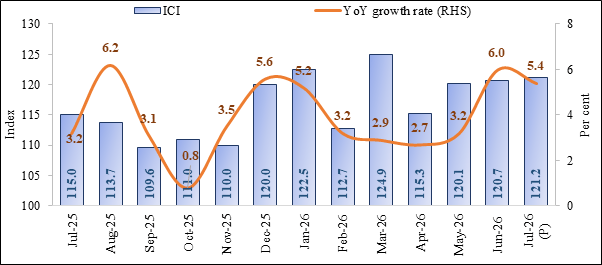
  1. The Index of Core Industries (ICI) grew by 5.4 per cent in July 2026 (Provisional Estimate) on a year-on-year basis, compared with July 2025. This is slightly less than the growth rate of 6.0 per cent recorded in June 2026 (Final Index).
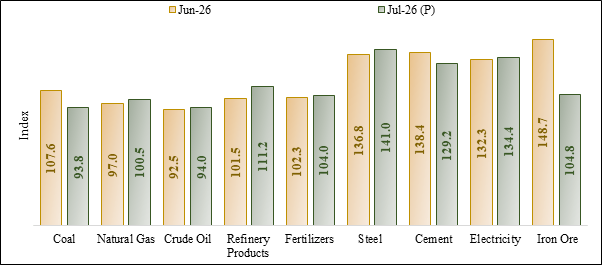
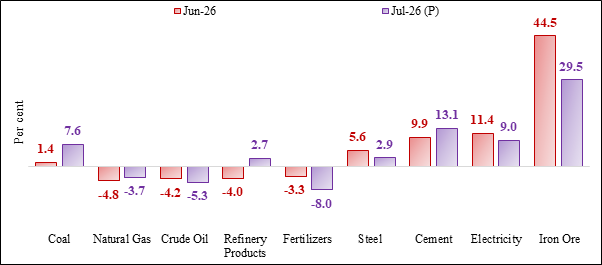
  2. Iron Ore, Cement, Electricity, Coal, Steel, and Refinery Products observed (Y-o-Y) growth rate of 29.5 per cent, 13.1 per cent, 9 per cent, 7.6 per cent, 2.9 per cent, and 2.7 per cent, respectively, whereas Natural Gas, Crude Oil, and Fertilizers witnessed negative growth in July 2026.
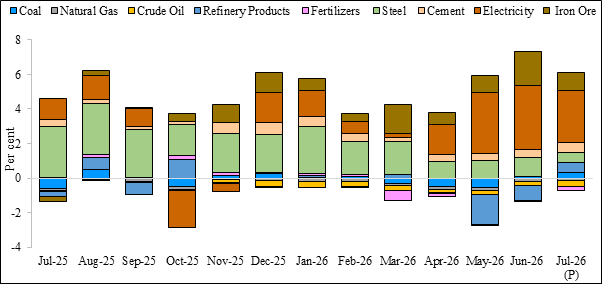
  3. Iron Ore, Electricity, and Cement have been the major drivers of overall growth of ICI during recent months.
  4. Cumulative growth rate of ICI during April-July 2026 was 4.3 per cent (Provisional Estimate) compared to 1.5 per cent in the corresponding period of the previous year.
  5. The charts (1 to 4) below show trend in ICI and its growth rate for the last 13 months, industry-wise indices and growth rates for June and July 2026, and sector-wise contribution to overall ICI growth in July 2026.

Chart 1: ICI and growth rate

(P)-Provisional

Chart 2: Sector-wise index in June and July 2026

(P)-Provisional

Chart 3: Sector-wise growth rate in June and July 2026

(P)-Provisional

Chart 4: Sector-wise contribution to growth

(P)-Provisional

  1. The final index for the month of June 2026 has been revised from 119.6 (Provisional Estimate) to 120.7. Accordingly, YoY growth rate has been revised from 5.0 per cent to 6.0 per cent.
  2. Index of Core Industries, and Year-on-Year (YoY) growth rate for the last 13 months is given at Annexure-I and Annexure-II. ICI for the months of April 2023 onward have been placed on the web portal of OEA at web link (https://eaindustry.nic.in/ici_download_data.asp).
  3. Annual and Cumulative Index and YoY growth rate is given at Annexure-III and Annexure-IV.
  4. Release Schedule: Provisional index of ICI for a reference month will be released on the 20th of the following month (if it is a working day, else on next working day). Accordingly, The ICI for the month of August 2026 will be released on Monday, 21st September 2026.

Annexure-I

Table 1: Index of Core Industries for last 13 months

SectorCoalNatural GasCrude OilRefinery ProductsFertilizersSteelCementElectricityIron OreOverall Index
Weight5.5963.8417.4322.5722.73117.5844.4130.9324.905100.00
Jul-2587.2104.499.3108.3113.1137.0114.2123.380.9115.0
Aug-2593.3104.698.2105.7114.9135.9109.6119.491.1113.7
Sep-2591.5100.793.399.0109.5133.0110.1115.291.5109.6
Oct-25104.1103.996.6108.9117.5131.7115.4104.4115.7111.0
Nov-25124.6102.193.9105.1114.9131.3119.097.9134.6110.0
Dec-25136.5103.296.5113.1116.3141.4141.2110.6146.5120.0
Jan-26141.5102.596.2112.5115.2148.1143.3114.5146.7122.5
Feb-26133.991.986.7101.2103.3134.7137.6107.1137.3112.7
Mar-26152.9101.295.7113.176.5149.2151.1119.5160.6124.9
Apr-2699.898.093.4100.682.5134.3129.5122.9137.1115.3
May-26105.099.695.8100.3101.2137.5132.5131.2148.5120.1
Jun-26107.697.092.5101.5102.3136.8138.4132.3148.7120.7
Jul-26 (P)93.8100.594.0111.2104.0141.0129.2134.4104.8121.2

Annexure-II

Table 2: YoY growth rate of ICI for last 13 months

SectorCoalNatural GasCrude OilRefinery ProductsFertilizersSteelCementElectricityIron OreOverall Index
Weight5.5963.8417.4322.5722.73117.5844.4130.9324.905100.00
Jul-25-12.3-3.3-0.8-1.41.915.711.13.7-7.13.2
Aug-2510.8-2.2-0.73.44.515.35.44.27.96.2
Sep-25-1.1-3.7-0.7-3.21.714.35.13.10.83.1
Oct-25-8.4-5.2-0.85.37.49.55.2-7.08.70.8
Nov-252.2-2.5-2.6-0.25.511.615.1-1.519.33.5
Dec-253.7-4.4-5.1-0.34.111.114.06.222.35.6
Jan-260.9-4.9-5.40.43.713.811.35.112.85.2
Feb-261.4-5.0-4.8-0.43.59.99.12.38.53.2
Mar-26-4.0-3.7-5.30.9-24.69.64.70.833.32.9
Apr-26-9.0-4.2-3.2-0.2-8.54.78.35.512.52.7
May-26-9.5-5.0-4.2-8.2-1.05.18.411.219.03.2
Jun-261.4-4.8-4.2-4.0-3.35.69.911.444.56.0
Jul-26 (P)7.6-3.7-5.32.7-8.02.913.19.029.55.4

Annexure-III

Table 3: Annual and Cumulative Index of Core Industries

SectorCoalNatural GasCrude OilRefinery ProductsFertilizersSteelCementElectricityIron OreOverall Index
Weight5.5963.8417.4322.5722.73117.5844.4130.9324.905100.00
2023-24111.7106.1100.6103.6103.7113.6108.9107.1107.3107.2
2024-25117.3105.798.4106.5106.7121.8115.9112.6112.2111.8
2025-26116.4102.095.8106.9106.6135.9125.8113.8121.2115.2
Apr-July 25104.8103.498.1106.0102.8131.4120.5119.2107.6114.4
Apr-July 26101.698.893.9103.497.5137.4132.4130.2134.8119.3

Annexure-IV

Table 3: YoY growth rate of Annual and Cumulative Index of Core Industries

SectorCoalNatural GasCrude OilRefinery ProductsFertilizersSteelCementElectricityIron OreOverall Index
Weight5.5963.8417.4322.5722.73117.5844.4130.9324.905100.00
2024-255.0-0.3-2.22.82.97.36.45.24.64.3
2025-26-0.7-3.6-2.70.4-0.111.68.51.08.03.0
Apr-July 25-3.0-2.9-1.5-0.3-2.311.08.1-0.2-5.51.5
Apr-July 26-3.1-4.4-4.3-2.5-5.24.59.99.325.24.3

DPIIT Signs MoUs with PhonePe and Shell India to Drive Innovation

The Department for Promotion of Industry and Internal Trade (DPIIT), Ministry of Commerce and Industry, signed Memoranda of Understanding (MoUs) with PhonePe and Shell India Pvt. Ltd. on 19 August 2026 to strengthen support for DPIIT-recognised startups and promote innovation across key sectors of the economy.

The partnerships are aimed at enhancing access to technology, digital infrastructure, mentorship, market opportunities and industry networks, while fostering a robust, inclusive and self-reliant startup ecosystem in the country.

Under its collaboration with DPIIT, PhonePe will provide DPIIT-recognised startups with a range of benefits, including transaction credits through its Payment Gateway, access to the Indus AppStore, dedicated onboarding and support services, and opportunities for enhanced brand visibility. PhonePe will also conduct regular masterclasses and webinars on topics such as fintech, sales, go-to-market strategies and business scaling, enabling startups to strengthen their capabilities and accelerate growth.

The MoU with Shell India will focus on supporting startups operating in the energy and climate-tech sectors. Through this partnership, Shell India will provide mentorship, strategic guidance, investor and incubator connect, and opportunities to participate in the Shell E4 Smart Energy Track. The initiative is expected to help startups access growth opportunities, scale innovative solutions and contribute to India’s clean energy transition.

In addition, the collaboration with Shell India will promote knowledge-sharing and ecosystem development through the preparation of sectoral success stories, white papers, policy briefs, industry landscape reports and case studies highlighting emerging innovations and best practices in the energy and climate-tech startup ecosystem.

Together, these partnerships are expected to strengthen access to digital infrastructure, industry knowledge, mentorship, market linkages and investment opportunities for startups, enabling them to scale sustainably, drive innovation and contribute to India’s economic growth and technological advancement.

DRI Busts Novel Attempt to Smuggle 56 kg Methamphetamine with Maize; Two Arrested

Continuing its sustained crackdown on transnational trafficking of narcotic drugs and psychotropic substances, the Directorate of Revenue Intelligence (DRI) has foiled a major attempt to illegally export a significant quantity of Methamphetamine from India to Saudi Arabia.

In an intelligence-led operation conducted by DRI during 16–17.08.2026, around 56 kg Methamphetamine in powdery form was recovered from an export consignment at the Nava Sheva Port. The contraband drug had been ingeniously mixed with maize in one of the 351 bags contained in this consignment. The recovered Methamphetamine and was seized, under the provisions of the Narcotic Drugs and Psychotropic Substances (NDPS) Act, 1985.

Swift investigation led to the identification of the exporter and the transporter/freight forwarder involved in the operation. Investigation revealed that the transporter/freight forwarder was coordinating with an overseas buyer for transportation and customs clearance of the export consignment. Based on their respective roles in the attempted trafficking, both persons were arrested under the provisions of the NDPS Act, 1985.                                                                              

The method of concealment — mixing a large quantity of Methamphetamine inextricably with maize and disguising the consignment as an ordinary agricultural commodity — represents a distinctive modus operandi intended to evade routine examination and detection during export.

Methamphetamine is a highly potent synthetic psychostimulant with a high potential for abuse and dependence. Illicit use can cause severe physical and psychological effects, including increased heart rate and blood pressure, agitation, paranoia, psychosis and other serious health complications; prolonged or repeated use can result in drug dependence and significant impairment of health and functioning.

DRI Busts Wildlife Trafficking Syndicate in Ivory Artefacts Trade

In a major operation, the Directorate of Revenue Intelligence (DRI) busted a syndicate of wildlife traffickers and seized 54 intricately carved ivory artefacts today.

Acting on a specific intelligence regarding the illicit trade of ivory artefacts, officers of the DRI, planned a meticulous operation at Lucknow and intercepted four persons of a syndicate involved in illicit trade of wildlife items that led to recovery of 54 exquisitely crafted artefacts made of ivory.

The recovered artefacts include animal figurines of bull, elephants, dog; human figurines of warrior, mother holding her child, and other items such as scissors, comb, agarbatti stand, sindoor dani etc.  The recovered artefacts made from ivory are exquisite, finely detailed and of potentially substantial commercial and antique value. The seized artefacts made from ivory and four members of syndicate were handed over to UP Forest Department for further investigation.

The Wildlife (Protection) Act, 1972, inter alia, prohibits trade and commerce in elephant ivory and articles manufactured therefrom, in furtherance of India’s international obligations under the Convention on International Trade in Endangered Species of Wild Fauna and Flora (CITES).

In month of July (Release link: https://www.pib.gov.in/PressReleasePage.aspx?PRID=2284262&reg=1&lang=1), in two distinct operations had seized 11 kg elephant ivory tusks in Sujangarh, Rajasthan and two intricately designed ivory idols of deities in Howrah Kolkata.

In month of May (Release link: https://www.pib.gov.in/PressReleasePage.aspx?PRID=2266027&reg=48&lang=2), DRI had busted one syndicate in Mysuru, Karnataka and had seized 4 kg of elephant tusks.

These series of operations underscores the increasing threat of illegal wildlife trafficking and highlights DRI’s unwavering commitment to safeguarding India’s biodiversity and dismantling such criminal networks in accordance with national laws and international obligations under CITES.

2026 Amendment to Indian Accounting Standards Overview

Important Update for Stakeholders!

The Ministry of Corporate Affairs has notified the Companies (Indian Accounting Standards) Amendment Rules, 2026 vide G.S.R. 725(E) dated 12th August, 2026.

The amended Rules shall come into force on the date of their publication in the Official Gazette. 

For the detailed notification, please refer to the official notification issued by MCA:

G.S.R. 725(E).—In exercise of the powers conferred by section 133 read with section 469 of the Companies Act, 2013 (18 of 2013), the Central Government, in consultation with the National Financial Reporting Authority, hereby makes the following rules further to amend the Companies (Indian Accounting Standards) Rules, 2015, namely:-

1. Short title and commencement.— (1) These rules may be called the Companies (Indian Accounting Standards) Amendment Rules, 2026.

(2) They shall come into force on the date of their publication in the Official Gazette.

2. In the Companies (Indian Accounting Standards) Rules, 2015, in the “Annexure”, under the heading “B. Indian Accounting Standards (Ind AS)”,

(A) in “Indian Accounting Standard (Ind AS) 101”; —

(i) after paragraph 39AI, the following paragraphs shall be inserted, namely:-

“39AJ [Refer Appendix 1]
39AK Annual Improvements to Ind AS (2024), amended paragraphs B5-B6. An entity shall apply those amendments for annual reporting periods beginning on or after 1 April 2026.”

(ii) in Appendix B, for paragraphs B5 and B6, the following paragraphs shall be substituted, namely:-

“B5 An entity shall not reflect in its opening Ind AS Balance Sheet a hedging relationship of a type that does not qualify for hedge accounting in accordance with Ind AS 109 (for example, many hedging relationships where the hedging instrument is a stand-alone written option or a net written option; or where the hedged item is a net position in a cash flow hedge for another risk than foreign currency risk) [see paragraph 6.4.1(a) of Ind AS 109]. However, if an entity designated a net position as a hedged item in accordance with previous GAAP, it may designate as a hedged item in accordance with Ind ASs an individual item within that net position, or a net position if that meets the requirements in paragraph 6.6.1 of Ind AS 109, provided that it does so no later than the date of transition to Ind ASs.
B6 If, before the date of transition to Ind ASs, an entity had designated a transaction as a hedge but the hedge does not meet the qualifying criteria for hedge accounting in paragraph 6.4.1(b)-(c) of Ind AS 109, the entity shall apply paragraphs 6.5.6 and 6.5.7 of Ind AS 109 to discontinue hedge accounting. Transactions entered into before the date of transition to Ind ASs shall not be retrospectively designated as hedges.”;

(B) in “Indian Accounting Standard (Ind AS) 107”;

(i) after paragraph 5A, the following paragraphs shall be inserted, namely:- “5B Paragraph 30A applies only to contracts to buy nature-dependent electricity that satisfy the requirements in paragraph 2.3A of Ind AS 109 and are outside the scope of that Standard in accordance with paragraphs B2.7-B2.8 of Ind AS 109.
5C Paragraph 30B applies only to contracts that satisfy the requirements in paragraph 2.3A of Ind AS 109 and have been designated in a cash flow hedging relationship in accordance with paragraph 6.10.1 of Ind AS 109.
5D Paragraph 30C applies only to contracts that satisfy the requirements in paragraph 2.3A of Ind AS 109 and have been entered into with regards to an entity’s electricity purchases. These contracts comprise those:
(a) within the scope of Ind AS 109; and
(b) outside the scope of Ind AS 109 in accordance with paragraph 2.4 of that Standard, including those excluded in accordance with paragraphs B2.7-B2.8 of that Standard.”;

Table: Instrument EA

Instrument EAAnalysis
Instrument EA is a loan with an interest rate that is adjusted every reporting period by a fixed number of basis points if the debtor achieves a contractually specified reduction in carbon emissions during the preceding reporting period.

The maximum possible cumulative adjustments would not significantly change the interest rate on the loan.
The contractual cash flows are solely payments of principal and interest on the principal amount outstanding.

The entity considers whether the contractual cash flows that could arise both before and after each change in contractual cash flows are solely payments of principal and interest (see paragraph B4.1.10).

If the contingent event of achieving the carbon emissions target occurs, the interest rate is adjusted by a fixed number of basis points, resulting in contractual cash flows that are consistent with a basic lending arrangement. It is only because the nature of the contingent event itself does not relate directly to changes in basic lending risks and costs that the entity cannot conclude without further assessment whether the cash flows on the financial asset are solely payments of principal and interest.

The entity therefore assesses whether, in all contractually possible scenarios, the contractual cash flows would not be significantly different from the contractual cash flows on a financial instrument with identical contractual terms, but without the contingent feature linked to carbon emissions (see paragraph B4.1.10A).

Because any adjustments over the life of the instrument would not result in contractual cash flows that are significantly different, the entity concludes that the loan has contractual cash flows that are solely payments of principal and interest on the principal amount outstanding.

Table: Instrument I

Instrument IAnalysis
Instrument I is a loan with an interest rate that is adjusted every reporting period to track the movements in a market-determined carbon price index during the preceding reporting period.The contractual cash flows are not solely payments of principal and interest on the principal amount outstanding.

The contractual cash flows are indexed to a variable (the carbon price index), which is not a basic lending risk or cost. The contractual cash flows are therefore inconsistent with a basic lending arrangement (see paragraph B4.1.8A).

Note: The principal rules were published in the Gazette of India, Extraordinary, Part II, Section 3, Sub-section (i), vide number G.S.R. 111(E), dated the 16th February, 2015 and last amended vide notification number G.S.R. 549(E), dated the 13th August, 2025.

Regional Rural Banks (RRBs) Record Strong Growth in Credit Delivery FY 2025–26

During FY 2025–26, Regional Rural Banks (RRBs) have continued to strengthen their role in promoting rural economic development and financial inclusion by expanding credit delivery and maintaining a strong focus on Priority Sector Lending (PSL).

While gross loans outstanding of RRBs increased by 10.3%, from ₹5,24,163 crore in FY 2024–25 to ₹5,78,349 crore in FY 2025–26, the performance of RRBs under the Reserve Bank of India’s Priority Sector Lending framework remained strong during the year. The average achievement against the overall PSL prescribed target of 75% reached 91.7% of Adjusted Net Bank Credit (ANBC). Almost all RRBs achieved the overall PSL target, reflecting the RRBs’ robust focus on supporting priority sectors and advancing financial inclusion.

Agriculture and allied activities remained the largest component of the RRB credit portfolio, with outstanding credit of ₹3.78 lakh crore, constituting 77% of total Priority Sector Lending. Farm credit accounted for nearly 98% of agricultural lending, thereby supporting crop cultivation, allied agricultural activities and investment in the rural economy

Credit to the MSME sector stood at ₹66,978 crore (13.6% of total PSL), reaffirming the pivotal role of RRBs in supporting rural entrepreneurship and employment generation. Over 95% of MSME lending was directed towards micro enterprises, reflecting the RRBs’ focus on financing first-generation entrepreneurs, self-employed individuals, artisans, and small business units in rural and semi-urban areas. Within MSME lending, the services sector accounted for the largest share, followed by manufacturing enterprises and Khadi & Village Industries.

RRBs extended credit of ₹3.49 lakh crore to weaker sections, reaffirming their commitment to financial inclusion and equitable access to institutional credit. In addition, lending for housing, education, renewable energy and social infrastructure continue to support inclusive and sustainable development by promoting human capital formation, household asset creation, clean energy adoption and the creation of local infrastructure.

Overall, the financial performance of RRBs during FY 2025–26 highlights sustained expansion in rural credit, strong alignment with national development priorities and continued support to farmers, micro-enterprises and other underserved segments. RRBs thus remain key pillars in advancing financial inclusion, strengthening rural livelihoods and supporting the Government of India’s vision of inclusive and balanced economic growth.

Union Minister for Finance and Corporate Affairs Smt. Nirmala Sitharaman Chairs 3rd Meeting

Union Minister for Finance and Corporate Affairs, Smt. Nirmala Sitharaman, chaired the 3rd Meeting of the Apex Monitoring Authority of the National Industrial Corridor Development and Implementation Trust (NICDIT) in New Delhi today. The meeting reviewed the progress of projects under the National Industrial Corridor Development Programme (NICDP) and deliberated on priorities for the next phase of industrial corridor development.

The meeting was attended by Union Minister for Commerce and Industry, Shri Piyush Goyal; Chief Minister of Madhya Pradesh, Dr. Mohan Yadav; and Vice-Chairman, NITI Aayog, Shri Ashok Kumar Lahiri.

Chairing the meeting, Smt. Nirmala Sitharaman appreciated the progress made under NICDP and said that the encouraging results on the ground indicate growing investor demand. She emphasised that the next pipeline of industrial land and infrastructure should be prepared well before the existing inventory is exhausted.

Smt. Sitharaman stated that Industrial Corridors are an important pillar of the Government of India’s strategy to expand manufacturing, strengthen logistics competitiveness and create globally competitive industrial ecosystems.

Recalling the emphasis placed at the previous Apex meeting, she said that Industrial Corridor development should be taken forward in the spirit of ‘Team India’. She also underlined the importance of convergence of Freight, Industrial Development, Railways and Expressways, the FIRE Corridors, for the success of the programme.

The Finance Minister stressed that the focus must now move beyond project approvals towards timely completion of infrastructure, land allotment, investment and commencement of production. She urged States to resolve bottlenecks relating to land, connectivity, utilities, statutory clearances and the powers of project Special Purpose Vehicles (SPVs).

She further stressed the need for integrated planning through PM GatiShakti and continued use of investor-friendly land allotment mechanisms. Worker housing, healthcare, skilling, public transport and other social amenities, she said, should form an integral part of industrial development.

Smt. Sitharaman also highlighted the Government of India’s support for infrastructure and manufacturing through enhanced public capital expenditure, support to States under SASCI, improved credit support for manufacturing MSMEs, and tax and customs measures aimed at strengthening domestic manufacturing and supply chains.

Union Minister for Commerce and Industry, Shri Piyush Goyal, called for faster and outcome-oriented implementation of Industrial Corridor projects, with greater focus on timely investment and operationalisation.

Shri Goyal stated that BHAVYA and future industrial developments should be aligned with PM GatiShakti and planned through an integrated area-development approach.

He called for focused investor outreach and stronger marketing of industrial nodes, including leveraging opportunities arising from India’s Free Trade Agreements and exploring country- and sector-specific industrial enclaves.

The Minister emphasised the need to match investor requirements with suitable locations and develop ready-to-use industrial ecosystems with plug-and-play infrastructure, flatted factories, worker housing and supporting economic and social infrastructure. Such an approach, he said, would facilitate faster investment and commencement of operations.

The National Industrial Corridor Development Programme now covers 20 approved projects across 13 States and 7 Industrial Corridors.

Four industrial smart cities — Dholera, Shendra-Bidkin, Greater Noida and Vikram Udyogpuri — have entered the production stage.

The 12 projects approved in August 2024 are also progressing, with infrastructure development, land allotment and investor engagement increasingly being undertaken in parallel.

So far, 469 plots covering approximately 5,348 acres have been allotted, with an estimated investment potential of around ₹2.21 lakh crore and employment potential of approximately 1.29 lakh persons. 134 units are already in production, while another 95 units are under construction.

Union Minister for Ports, Shipping and Waterways, Shri Sarbananda Sonowal, emphasised the integration of national waterways with Industrial Corridors and suggested examining waterways as a potential spine for corridor development.

He also stressed the need to develop industrial infrastructure in the North-Eastern States to broaden the country’s industrial base, particularly at locations offering strong connectivity, land availability, local resource advantages and market potential.

Vice-Chairman, NITI Aayog, Shri Ashok Kumar Lahiri, urged State Governments to give greater priority to empowering project SPVs with adequate planning, development and municipal powers, in line with the approved institutional and legal framework of the Industrial Corridor Programme.

He emphasised that effective delegation of these powers would enable SPVs to take timely decisions, reduce dependence on multiple State agencies and facilitate more coordinated, efficient and investor-friendly development.

The meeting commenced with the welcome address by Secretary, DPIIT and Chairman, NICDIT, Shri Amardeep Singh Bhatia, who outlined the progress since the previous Apex meeting and key implementation issues before the Authority.

This was followed by a presentation by CEO, NICDIT, Shri Rajat Kumar Saini, on the current status of Industrial Corridor projects, including progress in implementation, land allotment and investor mobilisation, as well as project-specific issues requiring coordination with States.

Representatives from participating States shared project-wise progress, key implementation challenges and areas requiring coordinated support. The discussions provided a platform for focused Centre-State engagement to resolve project-specific issues and accelerate implementation.

The Apex Authority underlined that the next measure of progress would be the speed at which completed and ongoing projects translate into active manufacturing centres, investment and employment.

The Apex Authority also reviewed the rollout of the Bharat Audyogik Vikas Yojana (BHAVYA), which envisages the development of 100 investment-ready, plug-and-play industrial parks across the country.

Against up to 20 projects proposed for approval in the first round, 87 applications have been received from States, reflecting strong interest in the scheme across the country.

It was emphasised that the planning and appraisal of BHAVYA projects should be fully aligned with PM GatiShakti, with infrastructure in and around industrial areas being planned as an integral part of industrial development.

BHAVYA will build on the experience gained from Industrial Corridor projects. The appraisal of proposals will focus on factors including availability of ready land, credible industrial demand, strong connectivity, assured utilities, realistic phasing and the ability to attract investors at an early stage.

The discussions at the meeting underlined a clear direction for the next phase of industrial infrastructure development: progress will be measured not only by the infrastructure created, but also by how quickly projects attract investment, commence production and generate economic activity and employment.

The meeting was also attended virtually by Union Minister for Ports, Shipping and Waterways, Shri Sarbananda Sonowal; Chief Minister of Maharashtra, Shri Devendra Fadnavis; Chief Minister of Bihar, Shri Samrat Choudhary; Chief Minister of Haryana, Shri Nayab Singh Saini; Chief Minister of Kerala, Shri V. D. Satheesan; Chief Minister of Uttarakhand, Shri Pushkar Singh Dhami; Ministers from participating States; senior officials of the Government of India and State Governments; and other stakeholders.

About NICDIT

The National Industrial Corridor Development and Implementation Trust (NICDIT) is a Trust constituted by the Government of India for the coordinated and unified development of Industrial Corridors across the country. It functions under the administrative control of the Department for Promotion of Industry and Internal Trade (DPIIT), Ministry of Commerce & Industry, and supports the development of trunk infrastructure in industrial nodes under the approved framework of the National Industrial Corridor Development Programme. Under BHAVYA, Government of India participation in project SPVs and equity support is routed through NICDIT.

About NICDC

National Industrial Corridor Development Corporation Limited (NICDC) is a Special Purpose Vehicle under the administrative control of DPIIT, Ministry of Commerce & Industry. NICDC undertakes project development activities and coordinates implementation of Industrial Corridor projects under the National Industrial Corridor Development Programme, working with State Governments and project SPVs to develop investment-ready industrial areas and smart industrial cities. Under BHAVYA, NICDC has been designated as the Project Management Agency for implementation and monitoring of the Scheme.

Government signs strategic MoUs with key industry leaders and ecosystems to strengthen support to StartUps

The Department for Promotion of Industry and Internal Trade (DPIIT), Ministry of Commerce and Industry, has announced a series of strategic Memoranda of Understanding (MoUs) with key industry leaders and ecosystem enablers—Cashfree Payments, Darwin Dynamics, Vultr India, Cars24, and the Council for Startup India (CSI).

Enhancing Digital Payment Infrastructure and Fintech Capabilities with Cashfree Payments

DPIIT has signed a Memorandum of Understanding (MoU) with Cashfree Payments India Private Limited to strengthen support for DPIIT-recognised startups by enhancing access to digital payment infrastructure, financial technology solutions, and capacity-building initiatives. The collaboration seeks to combine DPIIT’s institutional reach with Cashfree Payments’ expertise in digital payments to enable startups to scale efficiently and contribute to India’s innovation-led growth.

Under the partnership, eligible startups will receive access to secure and scalable payment and payout solutions, identity verification and risk management services, along with preferential onboarding support and commercial benefits. The collaboration will also facilitate founder workshops, mentoring sessions, AI buildathons, hackathons, and knowledge-sharing programmes to build capabilities in areas such as digital payments, compliance, fraud prevention, KYC, cross-border transactions, and emerging technologies.

Expanding Inclusive Entrepreneurship and Deep-Tech Innovation with Darwin Dynamics

DPIIT has signed a Memorandum of Understanding (MoU) with Darwin Dynamics LLP to strengthen entrepreneurship development and foster a more inclusive, innovation-driven startup ecosystem in India. The partnership aims to expand the reach of the Startup India initiative by promoting entrepreneurship across Tier II, Tier III and rural regions, while enabling greater access to mentorship, institutional networks, market opportunities and capacity-building support for startups.

Under the collaboration, Darwin Dynamics will work to facilitate startup formalisation, strengthen entrepreneurship awareness, support capacity-building programmes, and promote innovation in strategic sectors including clean energy, green hydrogen, artificial intelligence, climate technologies and advanced manufacturing.

The organisation will also undertake structured initiatives including startup outreach and formalisation drives, entrepreneurship bootcamps, mentor network development, international market access programmes, investor connect initiatives, and policy research studies. The collaboration is expected to create new opportunities for startups, particularly youth, women entrepreneurs, first-generation founders and innovators from underserved regions, while contributing to India’s vision of becoming a globally competitive innovation-led economy.

Boosting Technology and Cloud Infrastructure Access with Vultr India

The collaboration with Vultr India Pvt Ltd focuses on  strengthening the technology infrastructure available to DPIIT-recognised startups. The collaboration aims to enhance startups’ access to cloud computing resources, technical capacity-building, and digital infrastructure, enabling them to build, scale and innovate more efficiently.

Under the partnership, eligible DPIIT-recognised startups will have access to cloud credits, preferential pricing, and technical support through Vultr’s startup programmes. The collaboration also includes structured training sessions and technical handholding on cloud infrastructure, covering areas such as cloud computing, storage, databases, Kubernetes, networking, and application deployment to strengthen startups’ technology capabilities.

The cloud computing company will also explore participation in Startup India and DPIIT-led events to further engage with the startup ecosystem and promote technology adoption. The partnership is expected to support startups in leveraging advanced cloud infrastructure, reducing technology adoption barriers, and accelerating the development of innovative, globally competitive digital solutions.


Driving Mobility, Auto-Tech, and AI Innovation with Cars24

DPIIT has partnered with Cars24 Services Private Limited to foster innovation, entrepreneurship and capacity building in India’s mobility and automotive technology ecosystem. The collaboration aims to strengthen the startup ecosystem by supporting AI-driven innovation, founder development, skilling, investment opportunities and road safety initiatives.

The auto-tech company aims to provide structured mentorship to startup founders, promote mobility and autotech skilling programmes, facilitate AI-focused technology enablement, and organise innovation challenges and hackathons to encourage startup-led solutions. The collaboration will also support promising startups through investment evaluation and ecosystem engagement, particularly in the areas of mobility and artificial intelligence.

The partnership is expected to strengthen India’s innovation ecosystem by enabling startups to develop cutting-edge mobility solutions, enhance execution capabilities, and contribute to the advancement of safe, sustainable and technology-driven transportation.

Accelerating Investment, Governance, and Global Scaling with Council for Startup India (CSI)

DPIIT has signed a Memorandum of Understanding (MoU) with the Council for Startup India (CSI) to strengthen support for DPIIT-recognised startups by facilitating access to investment, strategic partnerships, mentorship, leadership development and global markets. The collaboration aims to accelerate the growth of innovation-driven enterprises by enabling startups to scale sustainably and strengthen their global competitiveness.

As part of the MoU, CSI will support startups through dedicated programmes on investment readiness, corporate engagement, CFO matchmaking, global market access, and international innovation collaborations. It will also facilitate corporate partnerships, support founders in governance, financial readiness, compliance and international expansion, and strengthen linkages between startups, investors, industry and policy stakeholders.

The partnership is expected to enhance access to finance, mentorship and commercial opportunities for startups, while contributing to the growth of a robust, globally competitive and innovation-led startup ecosystem in India.

ICAI Looks to Set a Brand New Standard

ICAI Proposes Own Revised SA600 Amid Concerns Over NFRA’s Recommendations

The Institute of Chartered Accountants of India (ICAI) is poised to submit its recommendations for revising the Standard of Auditing (SA) 600 to the government, following dissatisfaction with the National Financial Reporting Authority (NFRA)’s handling of the matter last year. This development may reignite tensions between the ICAI and the NFRA, the audit regulator primarily overseeing listed companies.

Sources indicate that the ICAI believes its concerns were largely overlooked by the NFRA when it presented a revised SA600 aligned with global standards to the Ministry of Corporate Affairs in late 2023. The ICAI opposed the NFRA’s recommendations, arguing that the revised standard primarily benefits large audit firms at the expense of small and mid-sized firms, which are essential to the Indian audit ecosystem. The NFRA, however, maintains that the changes would enhance audit quality across the country.

In response to these concerns, the ICAI plans to present its own version of the SA600 to the ministry, allowing the government to choose between the two versions for official notification. To reinforce its position, the ICAI has established a study group focused on solidifying its revised standard.

Key Issues at Play

The ongoing disputes surrounding the SA600 revision highlight several points of contention:

  • Audit Concentration: The ICAI fears that NFRA’s proposed changes may lead to increased audit concentration among a handful of firms, which could undermine competition and diversity in the industry.
  • Responsibility for Financial Statements: The ICAI has opposed proposals that hold the principal auditor liable for the entire financial statements of a corporate group, arguing that such a stance unfairly absolves the management of the holding company from accountability in instances of corporate fraud.
  • Overseeing Competence of Subsidiary Auditors: The NFRA’s requirement for group auditors to assess the competence of component auditors raises concerns from the ICAI, which argues that smaller firms often handle these audits. The ICAI warns that larger firms may exploit this oversight as a rationale to replace smaller firms, exacerbating audit concentration.

The Institute emphasizes that the Indian auditing landscape requires careful consideration of local needs and circumstances, particularly when adopting international standards. In its defense, the NFRA has countered the criticism, suggesting that the new rules would only affect a small percentage of the total active companies in India—primarily those that are listed, as well as banks and insurers.

As discussions continue, the ICAI remains committed to ensuring that any changes to auditing standards in India reflect the unique regulatory framework and professional environment of the country.

Challenges in MCA-21 V3: Key Issues Faced by Stakeholders

MCA:CL: SEPT/2025
Ms. Deepti Gaur Mukherjee
Secretary
Ministry of Corporate Affairs
Government of India
Shastri Bhawan
New Delhi-110001

Respected Madam,

September 29, 2025

Subject: Functioning of MCA-21 V3 Portal – Issues and Challenges faced by stakeholders-Reg.

This has reference to the transition of the compliance operations of the Ministry of Corporate Affairs from MCA-21 V2 to MCA-21 V3 platform in an attempt to embrace digital transformation and further the agenda of the Government of India’s efforts to promote Ease of Doing Business (EODB) for India Inc. Akin to every new initiative, issues and challenges are bound to creep in. We at the Institute of Company Secretaries of India are happy to partner with the Ministry in sharing these issues of the stakeholders as well as providing support wherever possible.

In this regard, we wish to submit that, as informed by professionals, certain technical glitches still persist, and they are unable to file the e-Forms as required under the Companies Act, 2013. Some of these issues/concerns/technical glitches are placed below for your kind consideration and timely resolution:

ISSUES AND CHALLENGES FACED BY PROFESSIONALS

Issue 1
Issue 2
Issue 3

We would like to bring to your attention that the Central Board of Direct Taxes (CBDT) has also extended the deadline for submitting the Tax Audit Report from September 30, 2025, to October 31, 2025. In this regard, we would like to inform you that, as conveyed by various stakeholders, technical glitches are still persisting, which have hindered their ability to file the required forms under the Companies Act, 2013. Accordingly, we wish to submit the following points for your consideration:

  1. Request for extension for the annual filing forms i.e., Form AOC-4 CFS NBFC (Ind AS), AOC-4(XBRL), AOC-4, AOC-4(CFS), AOC-4 NBFC (Ind AS), MGT-7, MGT-7A till December 31, 2025, without levying the additional fee.
  2. Request for relaxation in levy of additional fee concerning forms which are due between September 1, 2025, to December 31, 2025, in light of the continuing technical challenges.

We request you to kindly consider the aforesaid practical difficulties and provide for their early resolution. We shall be pleased to provide any further information or clarification in this regard on hearing from your good self.

Thanking You,
Yours faithfully,
(CS Dhananjay Shukla)
President
The Institute of Company Secretaries of India

MCA breaking: The deadline for filing e-forms DIR-3 KYC and DIR-3 KYC-WEB has been extended; do not delay or you will be fined.

General Circular No. 04/2025

F. No. 8/4/2018_CL-I(P)
Government of India
Ministry of Corporate Affairs
5th Floor, ‘A’ Wing, Shastri Bhawan,
Dr. R.P. Road, New Delhi: 110001

Dated: 29th September, 2025

To,
The Director General of Corporate Affairs,
All Regional Directors,
All Registrars of Companies,
All Stakeholders.

Subject: Extension of Time for Filing e-form DIR-3-KYC and Web-form DIR-3-KYC-WEB Without Fee Upto 15.10.2025 – reg.

Sir/Madam,

The Ministry has received suggestions to extend the time beyond 30.09.2025 for filing of e-form DIR-3-KYC and web-form DIR-3-KYC-WEB without payment of filing fee.

The matter has been examined in the Ministry and it has been decided to allow filing of e-form DIR-3-KYC and web-form DIR-3-KYC-WEB without filing fee upto 15th October, 2025.

This issue has been approved by the Competent Authority.

(Chiradeep Balooni)
Deputy Director, CL-I Section
Tel.: 011 2307 1190

Copy to:

  1. E-Governance Section with a request to place this circular on the Ministry website.
  2. Guard File

MCA invites public comments on establishing Multi-Disciplinary Partnership (MDP) firms

Subject: Invitation for Public Comments on Establishment of Indian Multi-Disciplinary Partnership (MDP) Firms by the Government of India – Reg.

The undersigned is directed to refer to the subject mentioned above and to say that the Government of India is committed to enabling the growth of large Indian firms capable of competing with leading international players by facilitating the establishment of Indian Multi-Disciplinary Partnership (MDP) firms. In this context, a Background Note has been prepared to identify the challenges faced by Indian firms and to seek suggestions for necessary amendments to laws, rules, and regulations. These inputs will help strengthen Indian firms to compete not only in the domestic market but also globally.

  1. The Ministry of Corporate Affairs is actively working towards amending the relevant Acts, rules, and regulations to support the growth of domestic MDPs and enhance their international competitiveness.
  2. All stakeholders are requested to review the Background Note and submit their responses on the same latest by 30.09.2025 on the ‘e-Consultation Module’ or at the email so-pimca@gov.in.
  3. This issues with the approval of the Competent Authority.

Encls.: As above.

To:
Digitally signed by
Randhir Kumar
Date: 17-09-2025
13:31:43
(Randhir Kumar)
Under Secretary to the Government of India

The Deputy Director, E-gov for placing the same on the website of MCA at ‘Notices’ What’s New and e-consultation module.

MCA notifies new accounting standard

MCA notifies new accounting standard for foreign currency transactions

The ministry of corporate affairs (MCA) has notified Companies (Indian Accounting Standards) Amendment Rules 2025, bringing changes primarily to the Ind AS 21, a standard that mandates companies to estimate the spot exchange rate when the “exchangeability” between two currencies is missing.

The move will help more accurately capture the impact of transactions conducted by firms in foreign currency on their financial statements. The proposed amendments to Ind AS21 will give clearer guidance to companies to determine “appropriate exchange rate,” a move which could come handy for them in dealing with countries witnessing undue short-term currency volatility or are not adequately transparent about the exchange values of their currencies.

“A currency is exchangeable into another currency when an entity is able to obtain the other currency within a time frame that allows for a normal administrative delay and through a market or exchange mechanism in which an exchange transaction would create enforceable rights and obligations,” the MCA notification said.

These amendments will be applicable from annual reporting periods starting April 2025. They  set the conditions for entities who can conclude that its functional currency is not exchangeable into the foreign currency. For instance, in case the “exchangeablility” is lacking, the entity can translate “affected foreign currency” (monetary items and non-monetary items) at a fair value in a foreign currency using the estimated spot exchange rate.

Industry sources feel the improvement in financial reporting from the proposed amendments would help enhance investors’ trust in Indian firms with substantial foreign operations, including the export-intensive ones. A major benefit being seen is in terms of capital inflows from global patient capital such as sovereign funds, pension funds.

Demat Deadline Extended by MCA to June 30, 2025

The Ministry of Corporate Affairs (MCA) has issued the Companies (Prospectus and Allotment of Securities) Amendment Rules, 2025 and has announced an extension to the deadline for mandatory dematerialization of shares for private companies.  Originally set for an earlier date, the new deadline for compliance is now 30th June 2025. This extension provides much-needed relief to private companies, giving them additional time to transition to the dematerialized form of holding securities.

The MCA’s decision to extend the deadline acknowledges these challenges and allows companies more time to prepare and adapt.  This includes setting up the necessary infrastructure, educating shareholders about the process, and completing the conversion of physical certificates to electronic form.

Key Benefits of Dematerialization:

The extended deadline provides a valuable opportunity for private companies to ensure a smooth and efficient transition to the dematerialized holding of securities.  Companies are advised to utilize this time effectively to comply with the regulations and reap the benefits of dematerialization.  Failure to comply by the new deadline may result in penalties.  

Disclaimer:  Every effort has been made to avoid errors or omissions in this material. In spite of this, errors may creep in. Any mistake, error or discrepancy noted may be brought to our notice which shall be taken care of in the next edition. In no event the author shall be liable for any direct, indirect, special or incidental damage resulting from or arising out of or in connection with the use of this information.

Audit Standard Authority: Only Govt Can Take Final Call

Only the government has the authority to issue binding audit standards and guidelines. The Ministry of Corporate Affairs (MCA) is the government body that issues legally valid and enforceable auditing standards. The Institute of Chartered Accountants of India (ICAI) and the National Financial Reporting Authority (NFRA) do not have the power to independently set audit standards. The ICAI can only make recommendations that are subject to government approval.

The Comptroller and Auditor General (CAG) is the sole authority responsible for auditing the accounts of the Union and the States. The CAG’s mandate also includes auditing government companies, corporations, bodies, and authorities. The CAG’s audit reports are presented to the Parliament or the Legislature of the State or the Union Territory.

NFRA has proposed revisions to 40 auditing standards (SA), including SA 600 and SA 299, which pertain to group audits and joint audits, respectively. The Institute of Chartered Accountants of India (ICAI) has opposed these standards, arguing that they could adversely impact smaller firms and lead to unnecessary duplication of work. According to NFRA insiders, while the standards themselves may not directly pertain to auditing, they could indirectly change auditing practices, a modification that can only be authorized by the Ministry of Corporate Affairs (MCA).

The Solicitor General of India provided an opinion to the National Financial Reporting Authority (NFRA), stating that the ICAI lacks the authority to issue binding auditing standards or guidelines, as reported by informed sources.

Furthermore, ICAI can only take action against individual Chartered Accountants, not audit firms, according to these sources.

The authority to establish auditing and accounting standards resides solely with the government, specifically the Ministry of Corporate Affairs (MCA). “Neither NFRA nor ICAI have the power to set binding auditing standards. They can only make recommendations to the government, which holds the ultimate decision-making power to accept or reject these recommendations,” the source explained.

This legal opinion was sought in relation to the Standards of Quality Management 1 and 2 (SQM) presented by the Institute last month. However, ICAI representatives contend that these standards focus on quality management—as opposed to auditing standards—by providing firms with standard operating procedures (SoPs) and guidance to facilitate smooth operations and enhance quality management.

Urgent Reminder: Registration for Prime Minister Internship Scheme Closes on November 10

Last Call for Prime Minister Internship Scheme Applications

The registration window for young applicants on the dedicated portal under the Prime Minister Internship Scheme (PMIS)—a landmark initiative aimed at boosting employability among Indian youth—will close on November 10, as announced by the Ministry of Corporate Affairs (MCA) on Monday.

“Last Call! Don’t miss your chance to apply for the PM Internship Scheme! Applications close on November 10th—seize this opportunity to shape your future!” read a social media post by the MCA on platform X.

The response to the PMIS has been overwhelmingly positive, with a diverse array of industries eager to engage young talent and shape the future workforce. To date, 280 companies have onboarded to the dedicated portal www.pminternship.mca.gov.in and offered 1.28 lakh internship opportunities under this scheme. The corporate registration window closed on October 20, official sources confirmed.

Launched on October 3, the pilot scheme under PMIS allows corporates to onboard and register their internship opportunities. The youth registration window was opened on October 12. The MCA is administering the PMIS, which was announced in this year’s union budget, to address the growing need for employable skills and industry readiness among India’s youth.

The Government has allocated ₹800 crore for the pilot scheme, aimed at providing 1.25 lakh internships to youth aged between 21 and 24 in FY’25. The target date for providing these internships under the pilot project is set for December 2. Youth aged 21-24 who have completed their 10th, 12th, ITI, Polytechnic, Diploma, or are graduates are eligible to benefit from this scheme. Top 500 corporates by CSR spend (average of the last three financial years) have been permitted to participate and offer internship opportunities to youth.

Enhancing Employment

The PMIS aims to provide young Indians with practical industry experience while enhancing their employability. The scheme seeks to bridge the gap between academic learning and industry requirements by offering internship opportunities across diverse sectors, including technology, manufacturing, finance, retail, healthcare, and more.

The government’s focus on making India’s youth job-ready and aligning their skills with market demands resonates with companies eager to contribute to workforce development, according to economy watchers. Notable corporates offering internship opportunities include Mahindra & Mahindra, Tata Consultancy Services, Larsen & Toubro, Reliance Industries, HDFC Bank, Maruti Suzuki, Tech Mahindra, ONGC, Bajaj Finance, Eicher Motor, Max Life Insurance, Muthoot Finance, and Jubilant Foodworks.

Sectors witnessing the most internship opportunities include oil, gas & energy, automotive, travel and hospitality, banking and financial services, and metals and mining. Other key sectors include manufacturing & industrial, infrastructure and construction, IT and software development, FMCG, and telecom.

Presently, internship opportunities are available in 737 districts across 37 States and Union Territories, indicating a strong response from youth towards the pilot scheme.

The PMIS aligns directly with the Prime Minister’s vision of a “Viksit Bharat,” an India that is prosperous, advanced, and equipped to face future challenges. By recognizing that practical skills are as essential as theoretical knowledge, the scheme integrates real-world experience into academic learning, preparing students for the workforce and reducing the skills gap.

The PMIS is part of the government’s broader strategy to boost India’s human capital development and improve youth employability.

PMIS Benefits

Under the PMIS, interns will receive an allowance of ₹5000 per month, along with a ₹6000 one-time grant. However, the MCA has recently stipulated that internship aspirants looking to avail benefits under the PM Internship Scheme must possess an Aadhar number or undergo Aadhaar authentication.

This is a vital opportunity for youth to gain valuable experience and enhance their skills for a successful future. Don’t miss your chance—apply before the deadline!