Retrospective Regularization of Exempt Status for Provident Fund Trusts

Provisions for Amnesty have been introduced as a transitional measure in the Employees’ Provident Fund (EPF) Scheme 2026, notified on 29.06.2026. Such provisions are a one-time opportunity for regularisation of exemption status of Provident Fund (PF) Trusts that are recognized under the Income Tax Act, 1961 (43 of 1961), but do not have a formal exemption order granted under section 17 of the Employees’ Provident Funds and Miscellaneous Provisions (EPF&MP) Act, 1952 or section 143 of the Code on Social Security (CoSS), 2020.

The operational guidelines for Amnesty, including manner of application, procedural requirements, etc. were provided for in the detailed circular issued on 11.07.2026. The Amnesty provisions are valid for a period of six months from the date of notification i.e. up to 28.12.2026. Besides retrospective regularization of exempt status, other key benefits that will accrue to PF Trusts include waiver of certain requirements like minimum employee headcount, corpus size and 3-year compliance rule that are under the CoSS, 2020. Post regularization on retrospective basis, an establishment may choose to comply either as an exempt or an unexempt establishment.

The Employees’ Provident Fund Organization (EPFO) is making all-out efforts to ensure that prospective applicants are properly made aware of the Amnesty provisions, and through its field offices are properly guided in the entire process. As part of the outreach drive, engagement with various stakeholders is currently on. EPFO has reached out to professional bodies like the Institute of Chartered Accountants of India (ICAI), whose members (CAs) undertake statutory or Income Tax audit of several establishments including in many cases where such establishments have formed PF Trust Funds and are in a good position to identify PF Trusts that can potentially avail the Amnesty scheme. ICAI has been requested to circulate the Amnesty provisions among its members so as to elicit good response from PF Trusts to the Scheme. Besides the above, EPFO field offices like Zonal Office UP and Zonal Office Kolkata have conducted seminars/ workshops with stakeholders.

Additionally, EPFO has reached out to the Income tax department seeking details of PF Trusts recognized under the Income Tax Act, requesting for undertaking corresponding check of an establishment’s status of coverage and exemption under the EPF&MP Act, 1952 or CoSS, 2020 before granting recognition under the IT Act, or withdrawing of existing recognition of PF Trusts which do not have formal exemption order from EPFO.

PF Trusts of establishments may apply for Amnesty scheme as per details outlined in the EPFO circular dated 11.07.2026 (available on EPFO website: https://www.epfo.gov.in).

India–Afghanistan Joint Working Group on Trade Holds Virtual Meeting

The India–Afghanistan Joint Working Group (JWG) on Trade, Commerce and Investment held its meeting virtually on 1st September 2026. The meeting was attended by officials from India and Afghanistan, including representatives from commerce, industry, customs, regulatory authorities and diplomatic missions.

The two sides reviewed various issues relating to bilateral trade and economic cooperation and discussed measures to further facilitate trade and strengthen commercial engagement between the two countries.

Key areas of discussion included trade facilitation and customs cooperation, visa facilitation for Afghan traders, banking and financial cooperation, pharmaceutical and agricultural trade, energy cooperation, investment and trade promotion, tariff concessions, cargo connectivity and port-related issues.

Both sides agreed to strengthen institutional cooperation and pursue follow-up actions in the identified areas, including enhanced customs and data-sharing cooperation, regulatory cooperation in pharmaceuticals and agriculture, improved trade connectivity, and promotion of investment and business-to-business engagement.

The meeting was held in a warm and constructive atmosphere. Both sides reaffirmed their commitment to further strengthening India–Afghanistan trade, commerce and investment ties and agreed to maintain continued engagement on the issues discussed.

Enter the Digital Shram Sankalp Hackathon: Submit Your Ideas by Sept 18

The Ministry of Labour & Employment had initiated the nationwide Ideation Hackathon, “Digital Shram Sankalp: Reimagining India’s Labour Ecosystem with AI”, on 5 August 2026, inviting innovative and technology driven ideas to strengthen India’s digital labour ecosystem. In view of the encouraging response and to provide further opportunity to interested participants, the last date for submission of entries has now been extended up to 18 September 2026. Hosted on the Innovate India platform of MyGov, the Hackathon invites innovative, implementable and scalable ideas for strengthening the Ministry’s key digital platforms, namely eShram, National Career Service (NCS) and Shram Suvidha Portal 2.0.

Participants may propose solutions using emerging technologies such as Artificial Intelligence, Data Analytics, Digital Public Infrastructure and interoperable digital systems. The solutions are expected to enhance employment services, worker welfare, ease of compliance, platform accessibility, user experience, data quality, system integration and citizen centric service delivery. The Hackathon features 12 problem statements covering different aspects of the Ministry’s digital labour ecosystem. It has received an encouraging response so far, with around 1,000 users submitting 1,368 ideas across the problem statements.

The Hackathon provides students, start-ups, innovators, entrepreneurs, institutions, researchers and technology professionals with an opportunity to apply their expertise to national scale digital platforms serving workers, jobseekers, employers and establishments across the country.

The top five ideas under each problem statement will receive cash prizes, while all eligible participants will be awarded a Digital Certificate of Participation by the Ministry of Labour & Employment. Winning participants may also be invited to present their proposals before senior officers of the Ministry. Promising ideas may be considered for pilot implementation and further development, with due recognition and credit.

The extended timeline provides participants with additional time to refine and submit their ideas. Registered users who have not yet submitted their entries, as well as other eligible individuals, are encouraged to utilise this opportunity and submit their ideas by 18th September 2026 at: https://innovateindia.mygov.in/digital-shram-sankalp.

Rajdharma Is a Continuing Ethic of Public Office: Insights from Arif Mohammed Khan

In a thought-provoking keynote at Reimagining Governance: Discourse for Excellence (RGDE), Shri Arif Mohammed Khan called for a deeper understanding of Rajdharma as an enduring ethic of public responsibility, emphasising integrity, empathy, fairness and non-discrimination in the exercise of public authority.

The session was organised by the Employees’ Provident Fund Organisation (EPFO) on 31st August 2026, under the aegis of the Pandit Deendayal Upadhyaya National Academy of Social Security (PDUNASS), as part of the second edition of Season Two of RGDE. Senior officers and officials from EPFO and PDUNASS, along with officers from Field offices of EPFO joining virtually from across the country, participated in the session.

Shri Khan reflected on the continuity and distinctiveness of Indian civilisation and described Dharma as a principle of righteous conduct and moral obligation. He emphasised that Rajdharma is ultimately concerned with the responsibility of those entrusted with public power and with the manner in which that power is exercised. He underlined the importance of non-discrimination in public life and of cultivating an approach in which the official seeks to serve rather than merely exercise authority.

He connected this ethical foundation with the inner discipline expected of a person holding public office. Referring to the spiritual idea that the Divine is present in every human being, Shri Khan stressed that an officer’s conduct should be guided by sincerity, honesty, self-restraint and a consciousness that public responsibility carries a moral dimension beyond formal procedure.

Reflecting on governance in practical terms, he stressed that rules, systems and technology are important instruments, but they cannot substitute for the human qualities that ultimately determine how citizens experience an institution. He emphasised that sincerity, cultural awareness and ethical conduct must remain at the heart of administration, particularly when officials are called upon to exercise judgement in everyday situations.

Central Provident Fund Commissioner Shri Ramesh Krishnamurthi contextualised the discussion within EPFO’s responsibility for providing social security to millions of workers, pensioners and their families. He emphasised the importance of balancing legal compliance with empathy and citizen-centric service delivery as the organisation embraces technological transformation.

He highlighted the need for officers to approach their responsibilities with a spirit of selfless service, particularly while dealing with the real-life circumstances behind claims, pensions and grievances.

Civilisational Wisdom and Contemporary Governance

Director, PDUNASS, Shri Kumar Rohit, highlighted the enduring relevance of Rajdharma to contemporary public administration. Referring to the Bharat-Milap episode at Chitrakoot, he recalled how Lord Rama, while declining to return to Ayodhya, entrusted Bharata with the responsibility of governance through his Charan Padukas and imparted timeless counsel on righteous statecraft.

He emphasised that RGDE seeks to create a space where civilisational wisdom, institutional experience and contemporary administrative practice can inform one another, ultimately returning to the central purpose of public service: serving the citizen with fairness, dignity and responsibility.

Ideas to Institutional Practice

The session also featured an interactive exchange with officers, focusing on the practical application of ethical and civilisational values in everyday administration, including situations where officials must exercise judgement, balance rules with circumstances, and retain empathy while working in increasingly technology-enabled systems.

The session was moderated by Shri Prashant Sharma, RPFC-I, who facilitated the proceedings and the interaction with Shri Khan, connecting the philosophical idea of Rajdharma with the practical realities of public service.

The session concluded with expressions of gratitude to Shri Arif Mohammed Khan and the participating officers, reaffirming PDUNASS’s commitment to fostering a culture of learning, reflection and excellence in public service.

DGFT Enables Automated Issuance of Free Sale and Commerce Certificates

In continuation with the initiatives taken by the Government from time to time to promote Ease of Doing Business for the exporting community, the Directorate General of Foreign Trade (DGFT) has enabled automated issuance of Free Sale and Commerce Certificates (FSC) on the DGFT portal. These Certificates are issued to exporters, under Foreign Trade Policy, for items which are not covered under the Drugs & Cosmetics Act, 1940. At present, such certificates are issued by Regional Authorities (RAs) of DGFT after scrutiny and verification.

Eligible applications will now be considered for automatic issuance in accordance with the prevailing framework, without being routed for manual scrutiny. The automated mechanism is expected to reduce processing time for a significant category of FSC applications and lower the compliance burden associated with the earlier manual process.

Applications requiring verification, or those not meeting the automated processing parameters, may continue to be routed to the concerned RA for manual processing.

Certain auto-approved applications may also be subsequently flagged to the concerned RA for review under the system’s risk management parameters.

The measure is expected to reduce avoidable manual intervention, improve the predictability of processing and facilitate faster issuance of FSCs for eligible exporters, while retaining appropriate verification and oversight for applications requiring scrutiny. By strengthening automated, rule-based processing and applying risk-based review, the initiative is expected to make the issuance of Free Sale and Commerce Certificates more efficient, transparent and predictable for exporters and administering authorities.

MCA Extends Companies Compliance Facilitation Scheme till 15 September 2026

The Ministry of Corporate Affairs (MCA) has extended the validity of the Companies Compliance Facilitation Scheme, 2026 (CCFS-2026) up to 15 September 2026, providing additional time to companies for completing their pending statutory filings.

The extension has been announced through General Circular No. 04/2026 dated 31 August 2026, issued by the Ministry of Corporate Affairs. The decision has been taken in view of representations received from various stakeholders seeking further continuation of the compliance facilitation window.

The Companies Compliance Facilitation Scheme, 2026 (CCFS-2026) was originally introduced by the Ministry through General Circular No. 01/2026 dated 24 February 2026 with the objective of providing companies an opportunity, inter alia, to complete their pending statutory filings. The Scheme was initially operational up to 15 July 2026.

Subsequently, the Ministry extended the last date of the Scheme up to 31 August 2026 through General Circular No. 03/2026 dated 8 July 2026. Following further representations from stakeholders, the competent authority has now decided to extend the validity of CCFS-2026 for another period, up to 15 September 2026.

The Ministry has clarified that all other terms and conditions of the Companies Compliance Facilitation Scheme, 2026 will remain unchanged. Accordingly, eligible companies may utilise the extended period in accordance with the existing provisions and conditions of the Scheme.

The latest extension is expected to provide additional facilitation to companies that are in the process of completing pending statutory filings and enable them to make use of the compliance opportunity available under CCFS-2026 before the revised deadline of 15 September 2026.

The circular has been issued with the approval of the competent authority.

Monthly Review of Accounts of Union Government of India up to July 2026

The Monthly Accounts of the Union Government of India upto the month of July, 2026 has been consolidated and reports published. The highlights are given below: –

The Government of India has received ₹13,06,709 crore (35.8% of corresponding BE 2026-27 of Total Receipts) upto July, 2026 comprising ₹8,44,560 crore Tax Revenue (Net to Centre), ₹4,23,013 crore of Non-Tax Revenue and ₹39,136 crore of Non-Debt Capital Receipts. ₹3,72,354 crore has been transferred to State Governments as Devolution of Share of Taxes by Government of India during this period which is ₹56,190 crore lower than the previous year.

Total Expenditure incurred by Government of India is ₹17,61,853 crore (32.9% of corresponding BE 2026-27), out of which ₹13,11,218 crore is on Revenue Account and ₹4,50,635 crore is on Capital Account. Out of the Total Revenue Expenditure, ₹4,26,566 crore is on account of Interest Payments and ₹1,53,513 crore is on account of Major Subsidies.

NPCI International and Uzbekistan’s NIPC Partner for UPI Payments via UZQR

NPCI International Payments Ltd. (NIPL), the international arm of the National Payments Corporation of India (NPCI), has entered into a commercial agreement with the National Interbank Processing Centre JSC (NIPC), operator of Uzbekistan’s national payment system, HUMO, on 30th August 2026. The partnership enables Indian travellers to scan Uzbekistan’s national interoperable QR code UZQR using their familiar UPI-enabled applications to make instant merchant payments across the country.

The announcement was made during the bilateral visit of the Prime Minister of India to Uzbekistan. The execution of the agreement follows formal approvals from financial regulators, including the Reserve Bank of India (RBI) and the Central Bank of Uzbekistan (CBU), which designated HUMO as NIPL’s authorised partner for cross-border merchant acceptance.

Key Highlights of the Agreement

  1. Universal Merchant Acceptance: By integrating with CBU’s mandated Unified National QR infrastructure (UZQR), UPI users gain near-universal acceptance across retail, hospitality, and service merchants in Uzbekistan.
  2. Seamless Travel Experience: Indian tourists, business travellers, and students can make direct person-to-merchant (P2M) payments from their Indian bank accounts, eliminating foreign exchange markup friction and reducing reliance on international cards or cash.
  3. Strengthened Bilateral Ties: The initiative advances digital public infrastructure cooperation and aligns with both nations’ broader strategic and economic goals.

UPI is Accepted in Ten Countries

Singapore, the United Arab Emirates, France, Mauritius, Nepal, Bhutan, Qatar, Sri Lanka, Cambodia, and Greece, enabling Indian travellers to make seamless payments abroad through UPI.

Commerce Secretary Shri Rajesh Agrawal Co-Chairs India-Brazil Trade Monitoring Meeting

The 8th Meeting of the India-Brazil Trade Monitoring Mechanism (TMM) was held in Brasília, Brazil. The meeting was co-chaired by Commerce Secretary, Ministry of Commerce & Industry, Shri Rajesh Agrawal, and Secretary of Foreign Trade, Ministry of Development, Industry, Commerce and Services (MDIC), Ms. Tatiana Lacerda Prazeres. The meeting, building on the strong political momentum led by Hon’ble Prime Minister Shri Narendra Modi and President Luiz Inácio Lula De Silva, reflected on the strong institutional framework underpinning the India-Brazil Strategic Partnership and the shared commitment of both sides to deepen strategic and economic ties.

Commerce Secretary also met Minister of Development, Industry, Commerce and Services, Government of Brazil, Mr. Marcio Elias Rosa, to discuss further deepening bilateral trade and investment ties and enhancing economic cooperation in priority sectors. Bilateral trade between India and Brazil has shown consistent growth, reaching USD 15.07 billion in 2025–26. Recognising the complementarities between the two economies, both sides reaffirmed their shared objective of expanding bilateral trade to USD 30 billion by 2030 through a more diversified, balanced and sustainable partnership, particularly in pharmaceuticals, chemicals, engineering goods and machinery.

During the meetings, both sides reviewed progress on the India–MERCOSUR Terms of Reference. The India–MERCOSUR Preferential Trade Agreement offers considerable scope for expansion and modernisation. With India-MERCOSUR bilateral trade reaching USD 20.84 billion in 2025, both sides committed to early finalisation of the Terms of Reference.

Significant progress was also made in facilitating market access for Indian pharmaceutical products. The CDSCO–ANVISA MoU signed in February 2026 provides an important institutional foundation for deeper cooperation in health and pharmaceuticals. India emphasised the need for supporting more predictable regulatory pathways and facilitating greater market access. India can contribute to the availability of affordable, quality medicines and strengthen efforts towards more accessible healthcare.

On agriculture, the discussions advanced work on priority phytosanitary requests on key products of interest, while laying out a clear agenda to take forward the technical processes towards reciprocal market access concessions in a time-bound manner. The discussions also noted the encouraging progress on mutual recognition of Electronic Certificates of Origin and on Cooperation in MSMEs, Entrepreneurship and Crafts, terming them significant steps towards greater trade facilitation and easing barriers to trade for business-to-business engagement.

Both sides reaffirmed close coordination on multilateral issues, including under BRICS, the G20 and the WTO, in support of an open, inclusive and development-oriented multilateral system. India appreciated Brazil’s engagement in advancing the Strategy for BRICS Economic Partnership 2030 and the GVC Action Plan 2026–2030. Brazil congratulated India on its work during its BRICS Presidency, particularly initiatives such as the BRICS Startup Knowledge Hub and BRICS Business Incubator.

As a part of the bilateral engagement, an India-Brazil High Level Business Reception was also organised in Brasilia with participation from leading business representatives and industry stakeholders from both countries. Commerce Secretary led the Indian business delegation comprising over 25 Indian businesses, including representatives from Kirloskar Group, UPL, Aditya Birla Group, amongst others. The Business Reception served as an important platform for exploring new avenues of collaboration in sectors such as critical minerals, renewable energy, agri-business, infrastructure, pharmaceuticals, digital services, logistics and advanced manufacturing. Both sides also welcomed the establishment of ApexBrasil office in New Delhi which will strengthen business-to-business linkages and greater flow of Brazilian investment in India. India and Brazil have a long-standing relationship characterised by mutual trust, democratic values, and growing economic engagement. The visit further boosted the momentum in bilateral ties and reaffirmed the shared commitment of both countries towards building a stronger and future-oriented economic partnership

DRI Seizes 18 kg of Synthetic Drugs in Major Crackdown

Continuing its sustained crackdown on trafficking of synthetic drugs, the Directorate of Revenue Intelligence (DRI), in two intelligence-led operations on 25.08.2026, seized around 14.9 kg Amphetamine at Bengaluru and 2.53 kg (approx) Amphetamine along with 878 grams MDMA tablets at Pune, cumulatively weighing more than 18 kg. Four persons have been arrested in the two cases under the provisions of the Narcotic Drugs and Psychotropic Substances (NDPS) Act, 1985.

On 25.08.26, in an intelligence-led operation, officers of DRI intercepted an Indian woman passenger at KSR Bengaluru Railway Station, who was travelling by train from New Delhi to Bengaluru and was suspected to be carrying a large quantity of contraband

Detailed examination of her baggage resulted in the recovery of seven packets containing a crystalline substance, weighing 14.9 kg (approx.) which, on preliminary testing using a field drug detection kit, indicated the presence of Amphetamine. The recovered psychotropic substance, along with the relevant packing and concealment material, was seized under the provisions of the NDPS Act, 1985.

Based on information gathered during the proceedings, DRI officers conducted a swift follow-up operation at the designated delivery location. A person who arrived at the spot to receive the baggage from the carrier was intercepted. Further follow-up action led to the interception of another person who had come to receive the contraband from the first receiver. All three persons involved in the transportation and attempted receipt of the contraband were arrested under the provisions of the NDPS Act, 1985.

In another unrelated intelligence-led operation on 25.08.2026, DRI intercepted another Indian woman passenger at Pune Junction station, who was travelling by train from Hazrat Nizamuddin Railway Station, Delhi, via Pune. 

Detailed examination of her baggage resulted in the recovery of a white/yellow-coloured crystalline substance purported to be Amphetamine, weighing 2.53 kg ( approx.)   and tablets purported to be 3,4-methylenedioxymethamphetamine (MDMA), weighing 878 grams (gross). The recovered contraband was seized under the provisions of the NDPS Act, 1985, and the passenger was arrested.

The latest seizures form part of DRI’s intensified efforts to interdict synthetic drugs and dismantle trafficking networks operating across the country. In a fortnight, DRI has now seized around 150 kg Amphetamine Type Stimulant (ATS) class of drugs in five operations, including 76 kg Methamphetamine tablets in two operations along India’s  North-Eastern frontier and 55.86 kg Methamphetamine concealed by mixing it with maize/corn in an export consignment destined for Jeddah, Saudi Arabia.

Major Drug Seizure: 66 Lakh Psychotropic Tablets Captured by CBN

In a major breakthrough against the illegal diversion and trafficking of psychotropic medicines, the Central Bureau of Narcotics (CBN) MP Unit, acting on specific intelligence developed by CBN, Neemuch, Madhya Pradesh Unit.

Acting upon specific intelligence regarding the movement of a massive illicit consignment of psychotropic medicines along the Punjab–Himachal Pradesh corridor, a specialised preventive team of the CBN MP Unit mounted sustained surveillance and strategically positioned itself on the Chandigarh–Baddi interstate route, under Operation Vajra 2.0 on 27-28 August 2026.

The operation resulted in the seizure of a massive consignment of 66,79,980 psychotropic tablets, comprising Alprazolam, Tramadol, Nitrazepam and Clonazepam, which was being transported without the requisite statutory documentation. One person has been arrested and one SML Isuzu Sartaj truck has been seized.

After maintaining overnight vigilance, on 27.08.2026, the team intercepted a suspicious SML Isuzu Sartaj truck bearing Uttar Pradesh registration and shifted them to a secure location for a detailed search.

A thorough carton-by-carton examination of the cargo led to the discovery of 120 master cartons containing controlled psychotropic substances. The consignment comprised Alprazolam, Tramadol, Nitrazepam and Clonazepam tablets, with a total quantity of 66,79,980 tablets.

Preliminary examination revealed several deliberate measures apparently adopted to conceal the illicit supply chain and evade regulatory tracking. Batch numbers, manufacturing dates and expiry dates had been erased from a substantial quantity of blister strips and boxes.

Further, substantial quantities of medicines bearing the marking “Not to be sold in Punjab Haryana State” were found being transported into the region without valid supporting documents such as invoices, bilty or E-way bills.

The detailed inventory, examination and sealing proceedings continued for more than 14 hours through the night. The entire consignment of 66,79,980 psychotropic tablets, along with the SML Isuzu Sartaj truck used for transportation, was seized under the relevant provisions of the Narcotic Drugs and Psychotropic Substances (NDPS) Act, 1985.

One Suspect has been arrested under the relevant provisions of the NDPS Act, 1985.

Intensive follow-up investigation is underway to identify and dismantle the upstream manufacturing and supply channels as well as the downstream distribution network involved in this major inter-state pharmaceutical diversion racket. The investigation will also seek to identify other persons and entities associated with the illegal diversion and trafficking of these psychotropic medicines.

The Central Bureau of Narcotics (CBN) remains firmly committed to the vision of a “Safe use of drugs or medicines” and “Nasha Mukt Bharat Abhiyan (NMBA)”. and continues to undertake intelligence-driven enforcement actions against the illegal trafficking and diversion of narcotic drugs and psychotropic substances.

During the current calendar year 2026, the Central Bureau of Narcotics (CBN) has demonstrated exceptional anti-smuggling performance by successfully booking 197 cases and arresting 272 persons involved in illicit drug networks. Demonstrating aggressive enforcement against synthetic manufacturing operations, the bureau effectively busted 6 clandestine laboratories. Furthermore, the agency’s extensive enforcement actions intercepted a massive volume of contraband, resulting in the seizure of approximately 51,000 kg of various NDPS drugs along with an additional staggering haul of 12,72,00,000 tablets and capsules of psychotropic medicines.

DRI Seizes 76 Kg of Methamphetamine in Assam and Mizoram

Continuing its sustained crackdown on narcotics trafficking along North-Eastern frontier, the Directorate of Revenue Intelligence (DRI) in two intelligence-led operations in Assam and Mizoram has seized 76 kg Methamphetamine tablets. Two persons have been arrested under the provisions of the Narcotic Drugs and Psychotropic Substances (NDPS) Act, 1985.

On 25.08.26, in the latest intelligence led operation, the officers of DRI, assisted by personnel of 38th Battalion, Assam Rifles, Silchar, intercepted a suspect 12-wheeler truck at Lalpani, around 40 km from Silchar near the Assam-Manipur border. The truck was identified from among a large convoy of vehicles arriving from Jiribam, Manipur.

Thorough examination of the truck led to the detection of a specially fabricated concealed cavity in the driver’s cabin behind the driver’s seat, which contained 36 brick-sized packets weighing 1 kg each and 100 smaller packets weighing 200 grams each, containing pinkish-orange tablets suspected to be Methamphetamine.

Preliminary testing of the samples using the field detection kit indicated the presence of Amphetamine. The recovered contraband, weighing 56 kg along with the truck was seized under the relevant provisions of the NDPS Act, 1985. The occupant of the vehicle was also arrested.

Earlier, on 18.08.2026, in another intelligence-led operation along the Aizawl–Champhai Road in Mizoram, officers of DRI intercepted a car at Bung Bangla, approximately 30 km from Aizawl. Detailed rummaging of the vehicle resulted in the recovery of 64 assorted-sized packets containing 20 kg of pinkish-orange tablets suspected to be methamphetamine, concealed inside specially designed deep cavities in the rocker panels/side sills along both sides of the vehicle and in the space between the fuel tank and the floor of the car.

Tests conducted using the NDPS field test kit indicated the presence of amphetamine. Preliminary investigation indicated that the drugs had been smuggled from Myanmar into Mizoram through the Zokhawthar–Champhai sector. The 20 kg contraband along with the vehicle used for its transportation, was seized under the provisions of the NDPS Act, 1985. The driver of the vehicle was arrested.

Methamphetamine is a potent synthetic psychostimulant with a high potential for abuse and dependence. Its illicit consumption can cause serious physical and psychological consequences, including cardiovascular complications, agitation, paranoia and psychosis, while prolonged abuse can lead to severe dependence and neurological and behavioural impairment. Methamphetamine is notified as a psychotropic substance under the NDPS Act, 1985, and its illicit manufacture, possession, transportation and trafficking attract stringent penal consequences.

Pradhan Mantri Jan Dhan Yojana: 12 Years of Financial Inclusion Impact

Launched by Prime Minister Shri Narendra Modi as one of his very first programmes on 28th August 2014, the Pradhan Mantri Jan Dhan Yojana (PMJDY) has completed 12 years. These 12 years of PMJDY have witnessed a transformation in India’s financial landscape, and the scheme has become a torchbearer for financial inclusion worldwide. As the world’s largest financial inclusion initiative, PMJDY continues to redefine access to banking for all Indians.

Expanding Financial Inclusion:

The Ministry of Finance remains committed to supporting marginalised and economically disadvantaged sectors through robust financial inclusion schemes and outreach. PMJDY ensures that every unbanked adult has access to a basic bank account—with no minimum balance requirement and no maintenance charges.

Each account comes with a free RuPay debit card, offering an accident insurance cover of ₹2 lakh, encouraging digital transactions and financial security. Account holders are also eligible for an overdraft facility of up to ₹10,000, providing a safety net during emergencies.

PMJDY accounts have also played a pivotal role in extending life and accident insurance to millions of workers in the unorganised sector, through Jan Suraksha schemes, viz. PM Jeevan Jyoti Bima Yojana and PM Suraksha Bima Yojana.

On the occasion, Union Minister of State for Finance, Shri Pankaj Chaudhary, said, “On 28th August 2014, the Hon’ble Prime Minister inaugurated the National Mission on Financial Inclusion, popularly known as Pradhan Mantri Jan Dhan Yojana (PMJDY). Today, I am happy that Pradhan Mantri Jan Dhan Yojana (PMJDY) is celebrating its 12th anniversary. We should not see PMJDY just in the light of the opening of more than 59 crore accounts, garnering a deposit balance of ₹3.17 lakh crore, or the issuance of 41.29 crore free-of-cost RuPay cards, but in its transformation of the banking and financial landscape of the country, where the delivery of financial services to the last person in society—the poorest of the poor—has been made possible without delay or the involvement of middlemen.”

Under PMJDY, 78% of the accounts have been opened in rural or semi-urban areas, and approximately 56% of accounts are owned by women, depicting the priority of the scheme, which was to bring the underprivileged living in far-flung areas of the country into the formal financial sector.

PMJDY has empowered millions, particularly the marginalized sections, to access banking and financial services to improve their socio-economic conditions. Account ownership has enabled the common man to have insurance and pension coverage. Through relentless saturation drives across every state and district, we have moved towards near-universal coverage of bank accounts and steadily widened the reach of insurance and pension schemes to those who need them most.

On the occasion of the 12th anniversary, I appreciate the efforts of bankers and business correspondents deployed throughout the country in taking the PMJDY scheme to the common man and making it a grand success.”

The JAM Trinity: A Game-Changer:

The Jan-Dhan–Aadhaar–Mobile (JAM) trinity, with PMJDY at its core, has proven to be a diversion-proof mechanism for the direct delivery of financial assistance. Through JAM, the government has successfully transferred welfare benefits directly into the bank accounts of the underprivileged, eliminating intermediaries and delays.

Milestones and Achievements:

a. PMJDY Accounts: 59.09 crore (As on 19th August ’26)

As on 19th August ’26, the total number of PMJDY accounts stands at 59.09 crore; 55.7% (32.92 crore) of Jan Dhan account holders are women, and 77.8% (45.95 crore) of Jan Dhan accounts are in rural and semi-urban areas.

b. Deposits under PMJDY Accounts – ₹3.17 lakh crore (As on 19th August ’26)

Total deposit balances under PMJDY accounts stand at ₹3,16,514 crore. Deposits have increased about 12.8 times, while the number of accounts has increased 2.3 times in the last 12 years (Aug ’26/Aug ’15).

c. Average Deposit per PMJDY Account – ₹5,356 (As on 19th August ’26)

The average deposit per account is ₹5,356 as on 19.08.2026. The average deposit per account has increased 3.4 times in the last 12 years (Aug ’26/Aug ’15). The increase in the average deposit is another indication of the increased usage of accounts and the inculcation of saving habits among account holders.

d. RuPay Cards Issued to PMJDY Account Holders: 41.29 crore (As on 19th August ’26)

41.29 crore RuPay cards have been issued to PMJDY account holders. The number and usage of RuPay cards have increased over time.

PMJDY’s success is driven by its mission-mode approach, regulatory backing, public-private partnerships, and the integration of digital public infrastructure like Aadhaar for biometric verification. It continues to be the first step towards financial inclusion, with further progress being achieved by enabling savings and credit access for those previously excluded from formal finance. With visible saving patterns, account holders are now eligible for loans, including MUDRA loans, empowering individuals to grow their incomes and build financial resilience.

As PMJDY enters its 13th year, it continues to be a beacon of inclusive growth, digital innovation, and economic empowerment. Its enduring success reflects India’s commitment to ensuring that no citizen is left behind in the journey towards financial well-being.

SIDBI Organizes Conclave on Expanding RRB MSME Co-Lending

The Small Industries Development Bank of India (SIDBI) organized a conclave of the Heads of Regional Rural Banks on expanding the SIDBI-RRB MSME Co-Lending arrangement on 25th August 2026 in New Delhi. The Conclave chaired by Shri Sanjay Lohiya, Secretary, Department of Financial Services was attended by Shri Manoj Mittal, CMD, SIDBI; senior officials from DFS, SIDBI and NABARD; and Chairmen of all 28 Regional Rural Banks.

During the Conclave, Secretary, DFS, emphasized the importance of scaling up MSME lending in rural and semi-urban areas. The proposed arrangement synergizes the strengths of SIDBI, which understands the credit needs of MSMEs, and RRBs, which have an excellent reach across the smaller towns and villages of the country. RRBs will also be able to achieve their goal of diversifying their loan portfolios by focusing on MSME lending, and rule engine-based underwriting is also expected to help them maintain good asset quality.

Additional Secretary, DFS, while addressing the conclave, indicated the importance of MSME cluster data for a focused approach to reaching out to a large number of MSMEs. RRBs should contribute towards making the country a next-generation manufacturing hub and also take an active part in Rozgar Melas conducted by state governments to disseminate financial awareness among MSMEs. Joint Secretary, DFS, suggested that RRBs make MSME lending through this Co-Lending arrangement an important target for branches. CMD, SIDBI, also urged the RRBs to come forward and make the arrangement a success.

The Co-Lending Origination Platform developed by SIDBI is an end-to-end digital platform providing a faster and paperless credit journey, resulting in the quick sanction and disbursement of loans. Loan applicants will be informed of their in-principle sanctions within a very short turnaround time once all the details are provided through the application portal. The digital documentation and disbursement process also ensure that customers receive loan disbursements directly into their accounts without the need to visit branches at any stage of the process. With encouraging outcomes from the pilot implementation at three RRBs, the proposed expansion of this Co-Lending programme to more RRBs is expected to significantly address the credit needs of borrowers, especially in the Micro and Small segments, in rural and semi-urban areas.

Union Minister for Finance & Corporate Affairs Smt. Nirmala Sitharaman’s Official Visit

Union Minister for Finance and Corporate Affairs Smt. Nirmala Sitharaman will later undertake an official visit to Canada and the United States of America from 25th August to 2nd September 2026, with a focus on strengthening bilateral economic and financial partnerships, deepening investment linkages and advancing cooperation on shared global economic priorities.

During her visit to Toronto, Canada, Smt. Sitharaman will participate in the inaugural Economic and Financial Dialogue with H.E. Mr. François-Philippe Champagne, Minister of Finance and National Revenue of Canada. The Dialogue will provide an important platform for both sides to exchange views on macroeconomic developments, financial sector cooperation, bilateral investment opportunities and shared international priorities, and to further strengthen the economic and financial pillar of the renewed India-Canada partnership.

Bilateral discussions in recent months have also focused on opportunities in areas including energy, critical minerals, technology, innovation and resilient supply chains, alongside ongoing efforts towards a Comprehensive Economic Partnership Agreement (CEPA).

Smt. Sitharaman will participate in an Investment Roundtable with leading CEOs, Presidents and senior representatives, chief among them are from the energy, artificial intelligence and critical minerals sectors. The interaction will seek to facilitate greater business-to-business linkages, identify investment opportunities and promote long-term commercial partnerships between India and Canada, including opportunities in GIFT City-IFSC.

In another Business Roundtable, the Union Finance Minister will engage with senior business leaders on opportunities for Canada-India cooperation, long-term investment and growth of the financial sector. Senior Managing Directors and Chief Executive Officers of Indian Public Sector Banks will also participate in the discussions, providing an opportunity to explore avenues for greater financial-sector collaboration and investment linkages.

The Canadian Club of Toronto, in partnership with the Canada-India Business Council, will host a fireside conversation between Smt. Sitharaman and H.E. Mr. Champagne on advancing shared economic interests between the two countries. The discussion will cover the renewed Canada-India bilateral relationship, the investment climate, domestic economic priorities and the evolution and future trajectory of India-Canada economic and financial relations.

Smt. Sitharaman will also hold one-to-one meetings with CEOs and senior leadership of companies based in Canada, with discussions expected to focus on investment opportunities, India’s growth prospects and avenues for expanding the presence of Canadian businesses in India.

The Union Finance Minister will also participate in an interaction with the Indian diaspora in Toronto, providing an opportunity to engage with the Indian community and acknowledge its important role in strengthening people-to-people and economic linkages between India and Canada.

During the United States leg of the visit, Smt. Sitharaman will travel to Chicago, Asheville and New York from 28th August to 2nd September 2026.

In Chicago, Smt. Sitharaman will participate in an Roundtable Conference with prominent investors and engage with leading CEOs, Presidents and senior representatives of the private sector. Bilateral one-to-one meetings with CEOs and senior leadership of select companies in Chicago will also be held. The discussions will focus on India’s investment opportunities, economic outlook and areas for strengthening business and investment partnerships between India and the United States.

Smt. Sitharaman will also visit the Polsky Center for Entrepreneurship and Innovation at the University of Chicago, where she will exchange perspectives on entrepreneurship, innovation, technology commercialisation and strengthening linkages with India’s rapidly expanding startup and innovation ecosystem.

The Union Finance Minister will also interact with members of the Indian community in Chicago during her visit.

In Asheville, North Carolina, Smt. Sitharaman will lead the Indian delegation at the G20 Finance Ministers and Central Bank Governors (FMCBG) Meeting under the United States Presidency of the G20. The meeting, scheduled for 31st August and 1st September, will bring together Finance Ministers, Central Bank Governors and senior economic officials from G20 members to deliberate on key global economic and financial issues. The meeting follows the G20 Finance and Central Bank Deputies Meeting scheduled for 29th and 30th August.

India’s participation in the G20 Finance Track provides an important platform to contribute to discussions on global economic growth and stability, international financial cooperation and other issues of significance to emerging and advanced economies. The engagement will also provide an opportunity for India to advance its perspectives on contemporary global economic challenges and strengthen cooperation with G20 partners.

In New York, Smt. Sitharaman will participate in an Investor Roundtable with CEOs and senior representatives of leading New York-based companies. She will also hold one-to-one meetings with senior executives and CEOs from the financial sector to discuss investment opportunities, India’s economic and financial landscape, and avenues for strengthening financial and institutional linkages between India and the United States.

During her visit to New York, NASDAQ — a pioneering global electronic marketplace and one of the world’s leading technology-driven financial market platforms — will host Smt. Sitharaman in the bell-ringing ceremony. The visit will provide an opportunity to gain insights into developments in technology-driven financial markets and the evolving interface between technology and capital markets.

Service Producer Price Indices Q1 2026-27 Overview

The Provisional Estimates of Service Producer Price Indices for Q1 of FY 2026-27 and Final Estimates for Q4 of FY 2025-26 are as below: –

S. No.Service PPIQ4: 2025-26 (F)Q1: 2026-27 (P)
1.Securities Transaction Service Price Index91.789.9
2.(a)Banking Service Price Index100.5100.9
2.(b)Banking Service Contribution Index131.5134.8
3.Management of Pension Funds Service Price Index103.8113.3
4.Insurance Service Price Index102.9102.9
5.Telecom Service Price Index112.2112.2
6.Railway Service Price Index103.3103.4
6.(a)Railway Freight Service Price Index103.2103.3
6.(b)Railway Passenger Service Price Index103.5103.5
7.Air (Passenger) Service Price Index106.9126.4

(P)-Provisional, (F)-Final

Note: Weights have not been assigned to aforementioned services as these services do not cover the entire service sector. However, sub-service level weights under each service, have been computed using the data of FY 2022-23 for arriving at the PPI of respective Services.

  1. The Service Producer Price Indices (Base Year 2022-23) and the Year-on-Year (YoY) inflation rate of the seven services for last four quarters are given at Annexure.
  2. Quarterly Service PPIs from Q1 of FY 2023-24 to Q1 of FY 2026-27 are available at (https://eaindustry.nic.in/download_data_2223.asp)

Service PPIs for seven services for Q2 of FY 2026-27 will be released on Wednesday, 25th November 2026.

Annexure

Service PPIs (Base Year 2022-23) for last four Quarters

S. No.Service PPIQ2: 2025-26 (F)Q3: 2025-26 (F)Q4: 2025-26 (F)Q1: 2026-27 (P)
1.Securities Transaction Service Price Index92.489.291.789.9
2.(a)Banking Service Price Index103.6102.2100.5100.9
2.(b)Banking Service Contribution Index129.7132.0131.5134.8
3.Management of Pension Funds Service Price Index108.4106.3103.8113.3
4.Insurance Service Price Index102.7102.0102.9102.9
5.Telecom Service Price Index111.6112.2112.2112.2
6.Railway Service Price Index101.3102.6103.3103.4
6.(a)Railway Freight Service Price Index101.3103.2103.2103.3
6.(b)Railway Passenger Service Price Index101.3101.3103.5103.5
7.Air (Passenger) Service Price Index94.3107.3106.9126.4

(P)-Provisional, (F)-Final

Year-on-Year Inflation Rate for last four Quarters for Service PPIs (Base Year 2022-23)

S. No.Service PPIQ2: 2025-26 (F)Q3: 2025-26 (F)Q4: 2025-26 (F)Q1: 2026-27 (P)
1.Securities Transaction Service Price Index-5.81-4.800.55-1.32
2.(a)Banking Service Price Index-2.81-4.31-4.10-3.35
2.(b)Banking Service Contribution Index2.132.563.306.90
3.Management of Pension Funds Service Price Index1.59-0.56-0.765.20
4.Insurance Service Price Index0.10-3.040.680.98
5.Telecom Service Price Index0.450.990.990.72
6.Railway Service Price Index-0.200.491.181.27
6.(a)Railway Freight Service Price Index-0.880.000.000.10
6.(b)Railway Passenger Service Price Index1.301.303.503.50
7.Air (Passenger) Service Price Index–––31.94

Minister of State for Commerce and Industry and Electronics & Information Technology Shri Jitin Prasada Visits Morocco

Minister of State for Commerce and Industry and Electronics & Information Technology Shri Jitin Prasada is on an official visit to the Kingdom of Morocco from 24 to 25 August 2026. During the visit, both sides are expected to discuss measures to further diversify the trade basket and enhance market access opportunities.

Shri Jitin Prasada will co-chair the 7th Session of the India–Morocco Joint Commission with his counterpart, H.E. Mr. Omar Hejira, Secretary of State to the Minister of Industry and Trade, in charge of Foreign Trade, Kingdom of Morocco.

The Joint Commission meeting will provide an opportunity to review the existing areas of bilateral economic and commercial cooperation and work towards further consolidating and broadening mutually beneficial engagement. Discussions are expected to cover a wide range of areas, including trade and market access, cooperation in fertilizer production and supply, investment, industrial cooperation, customs, agriculture and food safety, pharmaceuticals and healthcare, energy and mining, renewable energy, digital transformation, transport and logistics, AYUSH, tourism, education and skills.

The two sides are also expected to sign a Memorandum of Understanding (MoU) on cooperation in the field of food safety between the National Office of Food Safety (ONSSA), Morocco, and the Food Safety and Standards Authority of India (FSSAI). The MoU will facilitate the exchange of information on the safety and quality of imported food products, promote cooperation in sharing information on food testing laboratories and analytical methods, and facilitate the exchange of expertise in areas of mutual interest. It will also enable technical exchanges relating to import procedures, quality control operations, sampling, testing, packaging and labelling.

A Cultural Exchange Programme between India and Morocco for the years 2026–2030 is also expected to be signed during the Joint Commission Meeting. The Programme will promote cultural exchanges and collaboration through exchanges of artists and professionals, participation in festivals and exhibitions, cooperation in heritage conservation, and strengthened linkages among museums, libraries and archival institutions.

India and Morocco share longstanding and close relations, with significant potential for further expanding bilateral trade and investment. Bilateral merchandise trade reached around USD 4 billion in 2025. India’s major exports to Morocco include refined petroleum, pharmaceuticals, vehicles, synthetic textiles, food products and spices, while Morocco’s major exports to India include phosphates and fertilizers.

As part of the visit, Shri Jitin Prasada will hold bilateral and high-level meetings with senior Moroccan leaders. He will also participate in the India–Morocco Joint Business Forum and engage with the business community to identify new opportunities for trade, investment, partnerships and joint ventures. The Minister will further interact with business leaders in Rabat during his visit.

The visit assumes added significance as India and Morocco will commemorate the 70th anniversary of the establishment of diplomatic relations in 2027, providing an opportunity to further deepen the longstanding partnership between the two countries.

The visit is expected to further strengthen the institutional framework for India–Morocco economic cooperation and provide fresh impetus to bilateral trade, investment, industrial partnerships and business-to-business engagement.

CBN Busts Inter-State Heroin Syndicate in ‘Op Black Hawk’: 18.6 kg Seized

In a major breakthrough against drug trafficking, officers of the Central Bureau of Narcotics (CBN) MP and UP Units successfully executed ‘Operation Black Hawk’, seizing total 18.64 kg crude heroin in back-to-back operations near Lucknow (U.P.). Three key members of an inter-state trafficking network have been arrested. The contraband originated from North-Eastern State and were being trafficked for consumption in Uttar Pradesh.

Developing first precise inputs from the CBN MP Unit regarding drug movement from the North-East region to Lucknow, joint teams from CBN MP and UP units established a strategic cordon along the Sultanpur–Lucknow Highway on the intervening night of August 20–21, 2026.

Following continuous tracking from at different Toll Plazas, the strike team intercepted an Assam-registered Hyundai Creta at near Lucknow on August 21. The vehicle was found empty and the occupants claimed innocence. Operational officers grew suspicious when the vehicle’s occupants on questioning disclosed to have refueled four times within a span of just 500 km. A physical tapping test of the fuel tank confirmed a hollow acoustic anomaly. At the CBN Office in Lucknow, technical assistance was utilized to dismantle the fuel tank, exposing a specially fabricated compartment holding 25 waterproof packages containing 16.46 kg of crude heroin. Both suspects were arrested.

In another (second) actionable intelligence developed by the CBN UP Unit indicated a heavy truck transporting contraband along the Siliguri–Lucknow corridor. CBN teams tracked the vehicle across multiple toll plazas before intercepting it near Barabanki. A systematic physical search revealed 2.16 kg crude heroin concealed inside a specially constructed secret chamber within the vehicle’s body frame. One suspect was arrested.

All three suspects have been booked under stringent provisions of the Narcotic Drugs and Psychotropic Substances (NDPS) Act, 1985. Both transport vehicles and the entire contraband consignment have been confiscated. Comprehensive follow-up financial and logistical investigations are currently underway to trace upstream suppliers in the North-East and dismantle connected downstream distribution channels.

Key seizures at a glance

  • Total Seized Drugs: 18.64 kg (16.48 kg from a Car and 2.16 kg from a heavy commercial vehicle)
  • Vehicles Impounded: one Assam-registered Hyundai Creta, one Heavy Commercial Truck.
  • Total Arrests: 3 Suspects (arrested under the NDPS Act, 1985)
  • Concealment Methods: Fabricated fuel tank cavity and secret body chambers in Truck.

Commerce and Industry Minister Shri Piyush Goyal Leads A 200-Member Business Delegation to Japan

Union Minister for Commerce and Industry, Shri Piyush Goyal, will visit Japan from 24 to 27 August 2026, travelling to Tokyo, Nagoya and Osaka, leading India’s largest-ever business delegation to Japan, comprising more than 200 business representatives and spanning sectors ranging from manufacturing, semiconductors, clean energy and steel to automotive, financial services, healthcare and start-ups. The visit reflects the scale of ambition both nations bring to their Special Strategic and Global Partnership, and comes at a time when India and Japan are looking to significantly deepen trade and investment ties.

In Tokyo, the Minister will hold a series of meetings with the top leadership of major Japanese conglomerates and industrial houses that have long been partners in India’s growth, alongside a round-table with Keidanren (Japan Business Federation), the apex body representing over 1,500 leading Japanese companies. Dedicated sessions are planned on semiconductors and artificial intelligence, start-ups, and engagement with foreign institutional investors, reflecting India’s growing pull as an investment and innovation destination. The Minister will also hold bilateral talks with his counterpart, H.E. Mr. Akazawa Ryosei, Minister of Economy, Trade and Industry (METI), and call on senior members of the Japanese Government and Parliament, besides interacting with the Indian community in Japan.

In Nagoya, the industrial heartland of Central Japan, the Minister will lead a roadshow with Chukeiren (Central Japan Economic Federation) and the Nagoya Chamber of Commerce & Industry, and engage with the Aichi Prefecture leadership and major manufacturing investors in the automotive and steel sectors.

The visit will conclude in Osaka with an Investors and Business Roadshow, along with meetings with leading Japanese companies across electronics, industrial and consumer sectors, aimed at showcasing opportunities across India’s manufacturing, clean energy and consumer markets.

Japan has consistently been among India’s most trusted partners in investment, technology and industrial collaboration, with Japanese enterprises playing a defining role across India’s automotive, steel, electronics, financial services and infrastructure landscape. This visit, backed by an unprecedented business delegation of more than 200 representatives cutting across sectors, is expected to give fresh momentum to bilateral trade and investment ties, and open new avenues of cooperation in high-technology manufacturing and next-generation industries — sectors central to India’s vision of Atmanirbhar Bharat and Viksit Bharat @2047.

APEDA Act Update: New Adjudication Rules Set Strict 6-Month Timeline for Penalties

The Government has notified the Agricultural and Processed Food Products Export Development Authority (Adjudication of Penalties) Rules, 2026, providing a detailed procedural framework for adjudication of penalties and disposal of appeals under the Agricultural and Processed Food Products Export Development Authority Act, 1985.

The Rules have been notified by the Ministry of Commerce and Industry through G.S.R. 741(E) dated 19 August 2026 and have come into force from the date of their publication in the Official Gazette.

The Rules have been framed in exercise of the powers conferred by clauses (ma) and (mb) of sub-section (2) of Section 32, read with Section 25A of the APEDA Act, 1985.

Adjudicating Officer to conduct inquiry into alleged contraventions

Under the new Rules, an Adjudicating Officer, appointed by the Chairman under Section 25A of the APEDA Act, will conduct proceedings relating to adjudication of penalties in respect of specified contraventions.

Upon receipt of a complaint regarding an alleged contravention, the Adjudicating Officer will issue a show-cause notice in Form-I, requiring the concerned person to explain why an inquiry should not be initiated.

The period provided for submitting a response to the show-cause notice cannot be less than seven days from the date of service of the notice. The notice is also required to clearly indicate the nature of the alleged contravention.

Opportunity of hearing and submission of evidence

After considering the response submitted by the concerned person, the Adjudicating Officer may proceed with an inquiry where considered necessary.

The person against whom proceedings are initiated may appear personally or through a duly authorised representative and will be given an opportunity to submit documents and evidence relevant to the inquiry.

Where necessary, the hearing may be adjourned to another date, subject to the conditions prescribed under the Rules. Such adjournment is to be not later than 15 days from the first date of hearing and up to a maximum of three dates.

The Rules further provide that, while taking evidence, the Adjudicating Officer will not be bound by the provisions of the Bharatiya Sakshya Adhiniyam, 2023.

Inquiry may proceed in absence in specified circumstances

Where a person fails, neglects or refuses to appear before the Adjudicating Officer despite being required to do so, the officer may proceed with the inquiry in the person’s absence after recording reasons.

After considering the available evidence, if the Adjudicating Officer is satisfied that a contravention has been committed, a penalty may be imposed through a written order under the provisions of the APEDA Act.

Every such order must specify the relevant provision of the Act that has been contravened and record the reasons for imposition of the penalty.

A copy of the order and other proceedings is required to be provided free of cost to the person against whom the inquiry was conducted.

Adjudication proceedings to be completed within six months

The Rules prescribe a defined timeline for adjudication proceedings. The Adjudicating Officer is required to complete the proceedings within six months from the date of issuance of notice to the person concerned.

The Rules also prescribe multiple modes for service of notices and orders, including delivery to the person or authorised representative, electronic mode, or speed post with registration and proof of delivery.

Where service cannot be effected through the prescribed methods, the notice or order may be affixed on a conspicuous part of the premises in accordance with the Rules.

Right of appeal against Adjudicating Officer’s order

The Rules provide an appellate mechanism for persons aggrieved by an order of the Adjudicating Officer.

An aggrieved person may file an appeal in Form-II before the Appellate Authority within 30 days from the date of receipt of the adjudication order.

The Appellate Authority may, however, admit an appeal after expiry of the 30-day period if satisfied that the appellant was prevented by sufficient cause from filing the appeal within the prescribed time.

The appeal must be accompanied by a copy of the adjudication order, a clear statement of the facts being challenged, grounds of appeal and the relevant provisions of the Act.

Defects in appeal may be rectified within 15 days

Where an appeal is found to be defective upon scrutiny, the Appellate Authority will inform the appellant of the deficiencies and provide 15 days for rectification.

If the appellant fails to correct the deficiencies within the prescribed period, the Appellate Authority may decline to register the appeal by recording reasons in writing and communicate the decision to the appellant within the stipulated period.

Appellate Authority to dispose of appeals within 60 days

Upon admission of an appeal, a copy will be served on the concerned party along with a notice requiring submission of a reply within a period not exceeding 30 days.

The Appellate Authority may call for records relating to the proceedings from the concerned Adjudicating Officer and, after providing the parties an opportunity of being heard, pass such orders as it considers reasonable.

The Rules stipulate that the Appellate Authority shall dispose of an appeal within 60 days from the date of its filing.

Provision for extension of prescribed timelines

The Adjudicating Officer or the Appellate Authority may extend a period specified under the Rules where there is a reasonable cause for delay or failure to act, subject to reasons being recorded in writing.

Every order passed under the Rules is required to be signed and dated and communicated to all concerned parties.

Further, all sums realised by way of penalties under the Rules will be credited to the Consolidated Fund of India.

Standardised Forms prescribed for show-cause notice and appeal

The Rules also prescribe standard formats to ensure procedural consistency.

Form-I has been prescribed for issuance of a show-cause notice in respect of alleged contraventions of the APEDA Act, while Form-II has been prescribed for filing an appeal against the order of the Adjudicating Officer.

The notification establishes a structured and time-bound framework for adjudication of penalties and appeals under the APEDA Act, including clear provisions relating to notice, opportunity of hearing, evidence, passing of reasoned orders and appellate review.

Amendment to Customs Notification G.S.R. 752(E) Explained

G.S.R. 752(E).— In exercise of the powers conferred by sub-sections (1) and (5) of section 9A of the Customs Tariff Act, 1975 (51 of 1975) read with rules 18 and 23 of the Customs Tariff (Identification, Assessment and Collection of Anti-dumping Duty on Dumped Articles and for Determination of Injury) Rules, 1995, the Central Government hereby makes the following further amendment in the notification of the Government of India, in the Ministry of Finance (Department of Revenue) No. 47/2021-Customs (ADD), dated the 26th August, 2021, published in the Gazette of India, Extraordinary, Part II, Section 3, Sub-section (i), vide number G.S.R. 590(E), dated the 26th August,
2021, namely:-

In the said notification, in paragraph 3, for the figures, letters and word “25th November, 2026”, the figures, letters and word “25th February, 2027” shall be substituted.

Note: The principal notification No. 47/2021-Customs (ADD), dated the 26th August, 2021, was published in the Gazette of India, Extraordinary, Part II, Section 3, Sub-section (i), vide number G.S.R. 590(E), dated the 26th August, 2021 and was last amended vide notification No. 09/2026-Customs (ADD), dated the 22nd May, 2026, published in the Gazette of India, Extraordinary, Part II, Section 3, Sub-section (i), vide number G.S.R. 387(E), dated the 22nd May, 2026.

Finance Ministry Allows 10 Lakh MT Duty-Free Raw Sugar Imports Till 31st October

G.S.R. 755(E).— In exercise of the powers conferred by sub-section (1) of section 25 of the Customs Act, 1962 (52 of 1962), the Central Government, on being satisfied that it is necessary in the public interest so to do, hereby exempts the goods of the description specified in column (3) of the Table below, falling under the tariff heading of the First Schedule to the Customs Tariff Act, 1975 (51 of 1975) (hereinafter referred to as the ‘Customs Tariff Act’), as specified in the corresponding entry in column (2) of the said Table, in such quantity of total imports of such goods, as specified in column (4) below (herein after referred to as the ‘Tariff Rate Quota (TRQ) quantity’), when imported into India, from the whole of the customs duty leviable thereon under the First Schedule to the Customs Tariff Act, subject to the condition specified in the Annexure to this notification, namely: –

TABLE

Sl. No.Tariff HeadingDescription of goodsTariff Rate Quota (TRQ) quantity
(1)(2)(3)(4)
1.1701Raw Sugar10,00,000 MT

ANNEXURE

Condition
(a) The TRQ is allotted to the importer by the Directorate General of Foreign Trade, in accordance with the relevant procedure as specified in the Hand Book of Procedures, 2023; (b) The TRQ authorization shall contain name and address of the importer, Importer-Exporter Code (IEC), Customs notification number, tariff heading as applicable, quantity and validity period of certificate; (c) The TRQ authorization shall be issued electronically by the Directorate General of Foreign Trade and transmitted to Indian Customs EDI System (ICES); and (d) Imports made against the TRQ shall be allowed only upon debiting electronically in the ICES system.

2.        This notification shall come into force with immediate effect, and shall remain in force upto and inclusive of the 31st day of October, 2026.

29 FDI Investments Worth ₹4,895.65 Crore Reported Under Revised Framework

A total of 29 FDI investments have been reported under the revised framework up to 20 August 2026, involving proposed FDI of ₹4,895.65 crore. These investments span a range of sectors, including Information Technology, Artificial Intelligence, Information & Communication, Manufacturing, Pharmaceuticals, Data Centres and Transport Services, among others.

The 29 investments have been reported by investors/entities based in jurisdictions including Mauritius, the United States, the Republic of Korea, Japan, Singapore, Luxembourg and the Cayman Islands.

The revised framework facilitates and expedites the flow of foreign investment into India by removing the requirement of prior Government approval in cases involving non-controlling Land Bordering Countries (LBC) ownership of up to 10%. The reform provides greater certainty to investors, reduces transaction time and further strengthens the ease of doing business in India.

With Press Note 2 of 2026 and the consequent amendment to the Foreign Exchange Management (Non-debt Instruments) Rules, 2019, notified on 1 May 2026, the beneficial ownership test is now applied at the level of the investor entity. Investors with non-controlling LBC ownership of up to 10% can invest through the automatic route, subject to applicable sectoral caps, entry routes and other conditions. The investor entity can proceed with the investment without obtaining any other approval, after reporting the relevant information to the Government.

Earlier, foreign investors with beneficial ownership from LBCs of India were required to obtain prior Government approval under Press Note 3 of 2020, even where such LBC ownership was very small. This had been a long-standing concern among investors seeking greater clarity and ease of investment.

India and ADB sign $230 million loan to modernise water supply and sanitation in Chennai

The Government of India and the Asian Development Bank (ADB) today signed a $230 million loan to modernise and expand Chennai’s water supply and sanitation infrastructure.

The Government of India’s engagement with ADB for the finalisation of the loan was done under the guidance of Shri Baldeo Purushartha, Joint Secretary (ADB & Japan), Department of Economic Affairs (DEA), Ministry of Finance.

Accordingly, the loan documents were signed by Shri Saurabh Singh, Deputy Secretary, Department of Economic Affairs, Ministry of Finance, on behalf of the Government of India, and Ms. Mio Oka, Country Director, India Resident Mission on behalf of the ADB.

The Chennai Climate-Resilient Water Security and Sewerage Project will improve access to safe and reliable water supply and better sanitation services across Chennai. It will also help strengthen the city’s resilience to climate change, improve public health and quality of life, and support a more efficient and financially sustainable urban water system.

ADB’s latest investment builds on earlier projects in the city to expand access to safe and equitable water and waste management services, in line with the Government of India’s flagship urban development interventions, such as the Atal Mission for Rejuvenation and Urban Transformation 2.0 and the Urban Challenge Fund.

The project will construct over 170 km of water supply pipes and sewer pipes, upgrade seven water pumping stations and 38 sewer pumping stations, and strengthen water utility assets and operations management through performance-based contracts. With this, Chennai will become the first Indian city to implement a comprehensive ring-main solution, a closed-loop plumbing system designed to maintain balanced water pressure and deliver water efficiently across service areas, improving reliability, equity, and resilience to natural hazards in its urban water supply system.

ADB will help digitally transform water and sanitation services through real-time monitoring, data-driven decision-making, and improved customer responsiveness. The project will introduce advanced technologies to eliminate hazardous manual sewer inspections, make blockage detection faster and safer, enhance worker safety, and prepare distribution networks in at least two Greater Chennai zones for future investments.

Government Workshop on Reservation Policy for Financial Services

The Department of Financial Services (DFS), Ministry of Finance, Government of India, is convening a workshop on 20-21 August 2026 at the Union Bank of India Staff College, Bengaluru, on the implementation of the Government of India’s Reservation Policy in Public Sector Banks (PSBs), Public Sector Insurance Companies (PSICs), Sectoral Regulators and Public Financial Institutions (PFIs). The workshop on Day 2 will address the issue of enhancing accessibility of financial services for Divyangjans.

The workshop is being organised in association with Union Bank of India, with the objective of strengthening institutional capacity to ensure uniform and effective implementation of reservation policies and promote welfare measures across public financial institutions.

On Day 1, the workshop was attended by over 100 participants, which included senior Human Resource functionaries and CLOs from the Reserve Bank of India (RBI), Pension Fund Regulatory and Development Authority (PFRDA), Insurance Regulatory and Development Authority of India (IRDAI), and all 12 Public Sector Banks, 7 Public Sector Insurance Companies and 7 Public Sector Financial Institutions.

Functional experts on reservation matters addressed the workshop, and the deliberations also included a round table on the practical aspects and issues being faced in the implementation of reservation policy. The day concluded with an interactive question-and-answer session, allowing participants to deliberate on actionable measures for uniform implementation of reservation policies across the financial services ecosystem.

Union Minister of State for Finance Shri Pankaj Chaudhary at 21st Award Ceremony

Union Minister of State for Finance Shri Pankaj Chaudhary participated virtually in the 21st Award Ceremony of Security Printing and Minting Corporation of India Limited (SPMCIL) at its Corporate Office in New Delhi today.

Smt. Anu P. Mathai, Additional Secretary and Member of the Board of SPMCIL; Shri Amit Singla, Joint Secretary, from the Department of Economic Affairs (DEA), Ministry of Finance; and Shri Vijay Ranjan Singh, Chairman and Managing Director, SPMCIL, also participated along with senior officials of the DEA and the SPMCIL.

The awards ceremony celebrated the SPMCIL’s proud tradition of recognising excellence, innovation, and dedication among its officers and employees.

In his video address, Shri Chaudhary commended SPMCIL’s vital contribution to strengthening India’s financial and sovereign infrastructure. He highlighted the Corporation’s role in producing secure currency, coinage, passports, and other sovereign products of national importance, and congratulated the awardees for their outstanding performance and commitment to excellence.

In her address on the occasion, Smt. Mathai underlined the importance of SPMCIL’s nine production units — four mints, two currency presses, two security presses, and one paper mill — as the backbone of India’s financial and sovereign framework. She emphasised that the dedication, integrity, and innovation of employees remain the pillars of SPMCIL’s success, and expressed confidence in the Corporation’s continued growth under the guidance of the Ministry of Finance.

In his address at the awards ceremony, Shri Amit Singla acknowledged SPMCIL’s operational achievements and reiterated the Ministry’s support in enhancing efficiency and governance standards. He also noted that since its incorporation in 2006, SPMCIL has completed two decades of vital national service, consistently delivering secure products that reinforce India’s financial and sovereign infrastructure.

Earlier in his welcome address, Shri Vijay Ranjan Singh highlighted the Corporation’s mandate as a Schedule ‘A’ CPSE under the Department of Economic Affairs, Ministry of Finance. He emphasised SPMCIL’s modernisation initiatives, strengthened compliance, and transparency measures, which have enabled the Corporation to meet the sovereign requirements of the nation with professionalism and integrity. He further noted that the commitment and innovation of employees across all units have been central to achieving significant milestones in productivity, quality, and corporate governance.

In addition to individual recognitions, SPMCIL units were awarded for best performance in diverse areas such as productivity, environment and safety, energy conservation, knowledge and development, vigilance, and official language implementation. The prestigious CMD Cup was awarded to Security Paper Mill, Narmadapuram, for its exemplary performance.

The event concluded with a Vote of Thanks, expressing gratitude to the Chief Guest, dignitaries, awardees, employees, and media representatives for their participation and support.

The 21st SPMCIL Award Ceremony reaffirmed the Corporation’s commitment to excellence, professionalism, and service to the nation, while recognising the invaluable contributions of its employees and units in advancing India’s financial and sovereign strength.

The list of awardees, including individual employees and units of SPMCIL for their extraordinary performance, is below.
July 2026 ICI Report: Key Growth Highlights

Key highlights of ICI for the month of July 2026

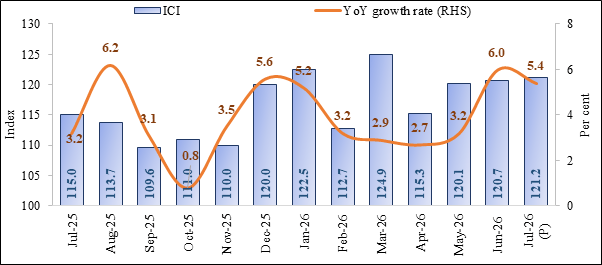
  1. The Index of Core Industries (ICI) grew by 5.4 per cent in July 2026 (Provisional Estimate) on a year-on-year basis, compared with July 2025. This is slightly less than the growth rate of 6.0 per cent recorded in June 2026 (Final Index).
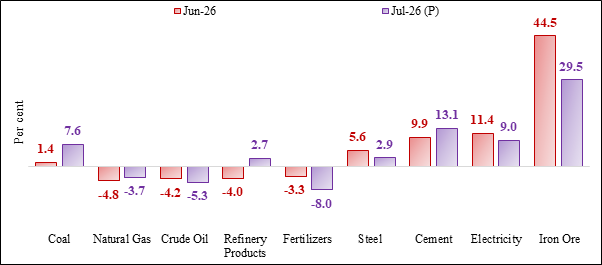
  2. Iron Ore, Cement, Electricity, Coal, Steel, and Refinery Products observed (Y-o-Y) growth rate of 29.5 per cent, 13.1 per cent, 9 per cent, 7.6 per cent, 2.9 per cent, and 2.7 per cent, respectively, whereas Natural Gas, Crude Oil, and Fertilizers witnessed negative growth in July 2026.
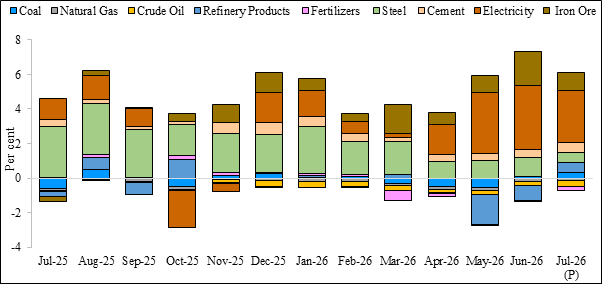
  3. Iron Ore, Electricity, and Cement have been the major drivers of overall growth of ICI during recent months.
  4. Cumulative growth rate of ICI during April-July 2026 was 4.3 per cent (Provisional Estimate) compared to 1.5 per cent in the corresponding period of the previous year.
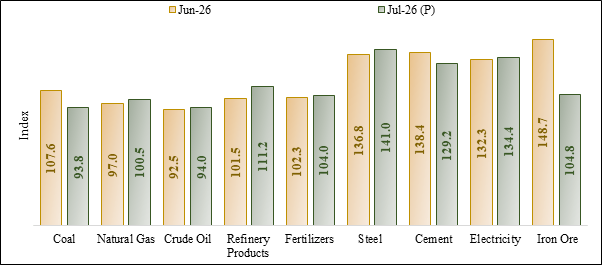
  5. The charts (1 to 4) below show trend in ICI and its growth rate for the last 13 months, industry-wise indices and growth rates for June and July 2026, and sector-wise contribution to overall ICI growth in July 2026.

Chart 1: ICI and growth rate

(P)-Provisional

Chart 2: Sector-wise index in June and July 2026

(P)-Provisional

Chart 3: Sector-wise growth rate in June and July 2026

(P)-Provisional

Chart 4: Sector-wise contribution to growth

(P)-Provisional

  1. The final index for the month of June 2026 has been revised from 119.6 (Provisional Estimate) to 120.7. Accordingly, YoY growth rate has been revised from 5.0 per cent to 6.0 per cent.
  2. Index of Core Industries, and Year-on-Year (YoY) growth rate for the last 13 months is given at Annexure-I and Annexure-II. ICI for the months of April 2023 onward have been placed on the web portal of OEA at web link (https://eaindustry.nic.in/ici_download_data.asp).
  3. Annual and Cumulative Index and YoY growth rate is given at Annexure-III and Annexure-IV.
  4. Release Schedule: Provisional index of ICI for a reference month will be released on the 20th of the following month (if it is a working day, else on next working day). Accordingly, The ICI for the month of August 2026 will be released on Monday, 21st September 2026.

Annexure-I

Table 1: Index of Core Industries for last 13 months

SectorCoalNatural GasCrude OilRefinery ProductsFertilizersSteelCementElectricityIron OreOverall Index
Weight5.5963.8417.4322.5722.73117.5844.4130.9324.905100.00
Jul-2587.2104.499.3108.3113.1137.0114.2123.380.9115.0
Aug-2593.3104.698.2105.7114.9135.9109.6119.491.1113.7
Sep-2591.5100.793.399.0109.5133.0110.1115.291.5109.6
Oct-25104.1103.996.6108.9117.5131.7115.4104.4115.7111.0
Nov-25124.6102.193.9105.1114.9131.3119.097.9134.6110.0
Dec-25136.5103.296.5113.1116.3141.4141.2110.6146.5120.0
Jan-26141.5102.596.2112.5115.2148.1143.3114.5146.7122.5
Feb-26133.991.986.7101.2103.3134.7137.6107.1137.3112.7
Mar-26152.9101.295.7113.176.5149.2151.1119.5160.6124.9
Apr-2699.898.093.4100.682.5134.3129.5122.9137.1115.3
May-26105.099.695.8100.3101.2137.5132.5131.2148.5120.1
Jun-26107.697.092.5101.5102.3136.8138.4132.3148.7120.7
Jul-26 (P)93.8100.594.0111.2104.0141.0129.2134.4104.8121.2

Annexure-II

Table 2: YoY growth rate of ICI for last 13 months

SectorCoalNatural GasCrude OilRefinery ProductsFertilizersSteelCementElectricityIron OreOverall Index
Weight5.5963.8417.4322.5722.73117.5844.4130.9324.905100.00
Jul-25-12.3-3.3-0.8-1.41.915.711.13.7-7.13.2
Aug-2510.8-2.2-0.73.44.515.35.44.27.96.2
Sep-25-1.1-3.7-0.7-3.21.714.35.13.10.83.1
Oct-25-8.4-5.2-0.85.37.49.55.2-7.08.70.8
Nov-252.2-2.5-2.6-0.25.511.615.1-1.519.33.5
Dec-253.7-4.4-5.1-0.34.111.114.06.222.35.6
Jan-260.9-4.9-5.40.43.713.811.35.112.85.2
Feb-261.4-5.0-4.8-0.43.59.99.12.38.53.2
Mar-26-4.0-3.7-5.30.9-24.69.64.70.833.32.9
Apr-26-9.0-4.2-3.2-0.2-8.54.78.35.512.52.7
May-26-9.5-5.0-4.2-8.2-1.05.18.411.219.03.2
Jun-261.4-4.8-4.2-4.0-3.35.69.911.444.56.0
Jul-26 (P)7.6-3.7-5.32.7-8.02.913.19.029.55.4

Annexure-III

Table 3: Annual and Cumulative Index of Core Industries

SectorCoalNatural GasCrude OilRefinery ProductsFertilizersSteelCementElectricityIron OreOverall Index
Weight5.5963.8417.4322.5722.73117.5844.4130.9324.905100.00
2023-24111.7106.1100.6103.6103.7113.6108.9107.1107.3107.2
2024-25117.3105.798.4106.5106.7121.8115.9112.6112.2111.8
2025-26116.4102.095.8106.9106.6135.9125.8113.8121.2115.2
Apr-July 25104.8103.498.1106.0102.8131.4120.5119.2107.6114.4
Apr-July 26101.698.893.9103.497.5137.4132.4130.2134.8119.3

Annexure-IV

Table 3: YoY growth rate of Annual and Cumulative Index of Core Industries

SectorCoalNatural GasCrude OilRefinery ProductsFertilizersSteelCementElectricityIron OreOverall Index
Weight5.5963.8417.4322.5722.73117.5844.4130.9324.905100.00
2024-255.0-0.3-2.22.82.97.36.45.24.64.3
2025-26-0.7-3.6-2.70.4-0.111.68.51.08.03.0
Apr-July 25-3.0-2.9-1.5-0.3-2.311.08.1-0.2-5.51.5
Apr-July 26-3.1-4.4-4.3-2.5-5.24.59.99.325.24.3

Union Minister of Commerce and Industry Shri Piyush Goyal in Singapore

Union Minister of Commerce and Industry, Shri Piyush Goyal, undertook a series of high-level bilateral and business engagements in Singapore on 20 August 2026, reinforcing the longstanding India-Singapore economic partnership and advancing cooperation in trade, investment, technology and business.

Shri Goyal began the day with a call on the Prime Minister of Singapore, Mr Lawrence Wong, at the Istana. He thereafter participated in the 4th India-Singapore Ministerial Roundtable (ISMR) and the 4th India-Singapore Business Roundtable (ISBR), held at Hotel Shangri-La. The Roundtables provided a platform to discuss ways to further strengthen bilateral economic engagement and identify new avenues for mutually beneficial cooperation. The Roundtables were followed by an MoU signing ceremony.

In the afternoon, Shri Goyal held a series of Government-to-Business (G2B) meetings with senior leaders from the global business and institutional community, including the Global Finance & Technology Network (GFTN) and Keppel Infrastructure. The discussions focused on strengthening India-Singapore collaboration in areas including agri-exports, GCC-based commercial parks, fintech and sustainable infrastructure.

Shri Goyal also jointly visited an APEDA-FairPrice initiative at City Square Mall along with Ms Gan Siow Huang, Minister of State for Foreign Affairs and Trade & Industry, Singapore. The engagement highlighted the growing agricultural trade and expanding market linkages between India and Singapore.

In the evening, Shri Goyal participated in the India-Singapore Business Forum organised by FICCI at the INSEAD Asia Campus. He also took part in a fireside chat on “India in the New Global Growth Equation: Growth and Opportunity for Businesses in Asia and the World”, followed by an interactive Q&A session with members of the business community.

The engagements reaffirmed the strong momentum in the India-Singapore economic partnership and India’s commitment to deepening trade, investment, technology and business-to-business linkages, while creating new opportunities for mutually beneficial growth.

The Indian side at the 4th India-Singapore Ministerial Roundtable comprised the Union Minister of Finance and Corporate Affairs, Smt. Nirmala Sitharaman; Union Minister of External Affairs, Dr. S. Jaishankar; Union Minister of Commerce and Industry, Shri Piyush Goyal; and Minister of State for Commerce, Shri Jitin Prasada. The Singapore side comprised the Deputy Prime Minister and Minister for Trade and Industry, Mr. Gan Kim Yong; Senior Minister, Coordinating Minister for National Security and Minister for Home Affairs, Mr. K. Shanmugam; Minister for Foreign Affairs, Dr. Vivian Balakrishnan; Minister for Digital Development and Information, Ms. Josephine Teo; and Minister for Transport and Second Minister of State for Finance, Mr. Jeffrey Siow.

DPIIT Signs MoUs with PhonePe and Shell India to Drive Innovation

The Department for Promotion of Industry and Internal Trade (DPIIT), Ministry of Commerce and Industry, signed Memoranda of Understanding (MoUs) with PhonePe and Shell India Pvt. Ltd. on 19 August 2026 to strengthen support for DPIIT-recognised startups and promote innovation across key sectors of the economy.

The partnerships are aimed at enhancing access to technology, digital infrastructure, mentorship, market opportunities and industry networks, while fostering a robust, inclusive and self-reliant startup ecosystem in the country.

Under its collaboration with DPIIT, PhonePe will provide DPIIT-recognised startups with a range of benefits, including transaction credits through its Payment Gateway, access to the Indus AppStore, dedicated onboarding and support services, and opportunities for enhanced brand visibility. PhonePe will also conduct regular masterclasses and webinars on topics such as fintech, sales, go-to-market strategies and business scaling, enabling startups to strengthen their capabilities and accelerate growth.

The MoU with Shell India will focus on supporting startups operating in the energy and climate-tech sectors. Through this partnership, Shell India will provide mentorship, strategic guidance, investor and incubator connect, and opportunities to participate in the Shell E4 Smart Energy Track. The initiative is expected to help startups access growth opportunities, scale innovative solutions and contribute to India’s clean energy transition.

In addition, the collaboration with Shell India will promote knowledge-sharing and ecosystem development through the preparation of sectoral success stories, white papers, policy briefs, industry landscape reports and case studies highlighting emerging innovations and best practices in the energy and climate-tech startup ecosystem.

Together, these partnerships are expected to strengthen access to digital infrastructure, industry knowledge, mentorship, market linkages and investment opportunities for startups, enabling them to scale sustainably, drive innovation and contribute to India’s economic growth and technological advancement.

Ensuring Social Security for Workers: A Path to Viksit Bharat

In the journey towards Viksit Bharat, the provision of  social security for the workers becomes imperative to create a healthy, resilient and secure nation. The workers of India are the true builders of the nation’s progress, and ensuring their welfare, dignity and well-being has remained the focus of the Employees’ State Insurance Corporation’s (ESIC) mission. This commitment is reflected in the disbursement of Cash Benefits and quality healthcare to its beneficiaries through an extensive infrastructure comprising of 169 hospitals, 1,603 dispensaries, 17 medical colleges, 2 dental colleges, 2 nursing colleges, 3 para-medical college, supported by 65 Regional/Sub-Regional Offices, 612 Branch Offices, and 117 Dispensary-cum-Branch Offices. The ESI Scheme is presently implemented in 728 out of a total of 787 districts across the country.  In addition to providing medical and social security benefits, ESIC is also investing in medical education with focus on skills, service delivery and compassion. 

As India strides toward its ambitious goal of creating 75,000 new medical seats, ESIC is contributing significantly to this goal by steadily expanding its medical education infrastructure to widen the pathways available to the country’s young aspirants. Today, 17 ESIC Medical Colleges stand operational across the country, offering UG Courses (1,550 MBBS seats) and PG courses (559 MD/MS seats, 182 DNB seats, 17 DrNB seats, 31 DM/M.Ch seats, 10 PhD seats). Additionally, there are 03 state-run medical colleges which contribute a further 330 MBBS seats. Further there are 2 ESIC Dental Colleges offering 124 seats, 2 Nursing colleges offering 120 BSc Nursing seats and 3 paramedical colleges offering 292 seats to students who aspire to serve society through medical sciences. With more medical colleges in the pipeline, ESIC is poised to further expand access to quality medical education, opening doors of opportunity for countless young minds who dream of becoming doctors, regardless of the circumstances into which they were born.

Through the ‘Ward of Insured Persons (IP) Quota’ seats are reserved for the children of workers covered under ESI Scheme in all the ESIC operated Medical Institutions. About 880 seats (comprising around 700 seats for the MBBS course and the remaining seats across BDS, B.Sc. Nursing and Paramedical/Allied Health Sciences courses) are reserved in all the ESIC operated medical institutions under the ‘Ward of IP’ Quota.  This initiative is ESIC’s commitment to the workforce of India whose hard work forms the backbone of India’s growth story and ensures that their children are empowered to pursue their aspirations, build successful careers and contribute to the nation’s future.

Till date, ESIC has contributed 4,961 Doctors to Nation through its medical colleges, out of which 1,682 are children of the workers covered under the ESI Scheme. At the postgraduate level, more than 1,200 students have passed out, further strengthening the country’s pool of specialised doctors.

As India moves toward its goal of becoming a developed nation by 2047, ESIC stays committed to its mission of ensuring comprehensive social security for workers and their families, while shaping the medical workforce of tomorrow and building a healthier, stronger India for generations to come.

  1. UG Students
Sl. No.Medical CollegeTotal UG StudentsWard of IP
1Joka800416
2Rajajinagar975367
3KK Nagar933163
4Sanathnagar616235
5Faridabad725210
6Gulbarga912291
 Total49611682
  1. PG Students
Sl. No.Name of CollegeTotal PG Students
 Andheri79
 Basaidarapur185
 Faridabad91
 Gulbarga12
 Joka143
 KK Nagar155
 Rajajinagar513
 Sanathnagar89
 Total1267