India’s New Tolling System: ANPR and FASTag Integration

Some sections of the media have reported that a Satellite-based Tolling System will be launched from 1st May 2025 and will replace the existing FASTag-based toll collection system. This is to clarify that no such decision has been taken by the Ministry of Road Transport and Highways or National Highways Authority of India (NHAI) regarding the nationwide implementation of satellite-based tolling from 1st May 2025.

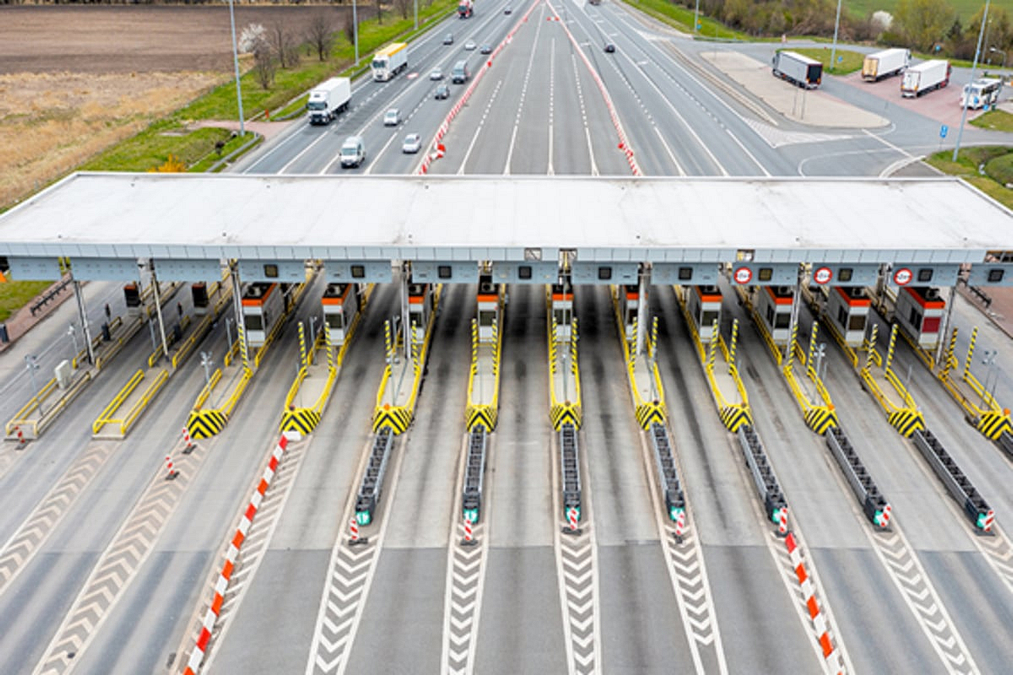
In order to enable seamless, barrier-free movement of vehicles through toll plazas and reduce travel time ‘ANPR-FASTag-based Barrier-Less Tolling System’ will be implemented at selected toll plazas.

The advanced tolling system will combine ‘Automatic Number Plate Recognition’ (ANPR) technology, that will identify vehicles by reading their number plates, and the existing ‘FASTag system’ that uses Radio-Frequency Identification (RFID) for toll deduction. Under this, vehicles will be charged based on their identification through high performance ANPR cameras and FASTag Readers, without needing to stop at the toll plazas. In case of non-compliance, E-Notices will be served to the violators, non-payment of which may result in suspension of FASTag and other VAHAN related penalties.  

NHAI has invited bids for the implementation of ‘ANPR-FASTag-based Barrier-Less Tolling System’ that will be installed at selected toll plazas. Based on the performance, efficiency, and user response to this system, a decision will be made regarding its implementation across the country.

GDH/HR
(Release ID: 2122632) Visitor Counter : 3822

Read this release in: Gujarati , Tamil , Urdu , Marathi

Toll tax rates will increase from midnight today, pockets will be even lighter; Know how much will it affect?

The National Highways Authority of India (NHAI) has increased the toll tax rates by five to ten rupees for the new financial year, which will come into effect from midnight of March 31 (April 1). The work of changing the fee rates has started at all the toll plazas of NHAI.

Information boards of the new fee will be installed on both sides of the toll by Monday evening. The increased toll will affect about ten lakh small and big vehicles that travel long distances daily through Lucknow, Nawabganj, Barabanki, Sultanpur, Ayodhya, Rae Bareli in the capital region.

The National Highways Authority of India (NHAI) has increased the toll fee by five to ten rupees per trip. The new toll fee rates will come into effect from midnight of March 31 (April 1). The authority issued a circular in this regard on Friday and gave this information. Project Director Saurabh Chaurasia said that from the first day of the financial year 2025-26, vehicles will have to pay more toll.

Nawabganj toll plaza of Kanpur road
Vehicle category     Present    Proposed
Car      95    100
Bus, truck    320    330
Small commercial    155    160

Ani toll plaza of Bahraich
Vehicle category     Present    Proposed
Car    45    45
Bus, truck    150    155
Small commercial    70    75

Ahmedpur Pur toll plaza of Barabanki highway
Vehicle category     Present    Proposed
Car    115    120
Bus, truck    395    405
Small commercial    185    195

Raunahi toll plaza of Ayodhya highway
Vehicle category     Present    Proposed
Car    120      125
Bus, truck    415    430
Small commercial    195 205

Dakhina Sheikhpur Toll Plaza of Raebareli
Vehicle Category     Current    Proposed
Car      115    120
Bus, Truck    385    400
Small Commercial    185    190

Shahabpur Toll Plaza of Barabanki Highway
Vehicle Category     Current    Proposed
Car      40    40
Bus, Truck    135    140
Small Commercial    65    65

Bara Toll Plaza of Barabanki
Vehicle Category     Current    Proposed
Car      105    110
Bus, Truck    350    365
Small Commercial    170    175

Asroga Toll Plaza of Sultanpur
Car      110      115
Bus, Truck     370    385
Small Commercial    175 185

Delhi-Meerut Expressway

Cars and jeeps will have to pay Rs 170 for travelling from Delhi to Meerut.

Toll charges for light commercial vehicles have become Rs 275.

Bus and trucks will have to pay Rs 580, earlier the toll was Rs 560.

Rs 115 will be charged for travelling from Indirapuram to Meerut by car and jeep.

Rs 175 will have to be paid for both sides of Indirapuram to Meerut by car and jeep.

Chhijarsi Toll Plaza (NH 9)

Rs 175 will have to be paid for cars, jeeps, vans, Rs 260 will be charged for both sides, monthly pass will be made for Rs 5795.

Rs 280 will have to be paid for light commercial vehicles and mini buses, Rs 420 for both sides, monthly pass will be made for Rs 9360.

Rs 590 will have to be paid for buses and trucks from one side, toll charges for both sides will be Rs 885 and monthly pass will be made for Rs 19,610. Eastern Peripheral Expressway
Light private vehicles like cars, jeeps and vans will have to pay a toll fee of Rs 280 to enter from Dasna and exit from Chhajjunagar.
Light commercial vehicles will have to pay Rs 290.
Toll fee has been increased from Rs 10 to Rs 70 at toll plazas.

Distance between Toll Gates

Fee plazas are established on National Highways as per the National Highways Fee (Determination of Rates and Collection) Rules, 2008, which stipulates that any other fee plaza on the same section of National Highway and in the same direction shall not be established within a distance of sixty kilometre provided that where the executing authority deems necessary, it may for reasons to be recorded in writing, establish or allow the concessionaire to establish another fee plaza within a distance of sixty kilometres. Provided further that a fee plaza may also be established within a distance of sixty kilometre from another fee plaza if such fee plaza is for collection of fee for a permanent bridge, bypass or tunnel. The distance criteria of sixty kilometres for establishment of a fee plaza has come to existence after National Highways Fee (Determination of Rates and Collection) Rules, 2008 and there was no such criteria in earlier National Highways Fee Rules, 1997.

In addition, in case of closed user fee collection system, fee plazas can be established anywhere on the National Highways.

Fee plazas functioning within 60 km range are also permissible and established as per the provisions of the NH Fee Rules and Concession Agreement.

This information was given by the Union Minister for Road Transport and Highways, Shri Nitin Gadkari in a written reply in the Lok Sabha today.

Good News! Electronic Toll Collection Through FASTag Grew 46% in 2022

Electronic Toll Collection (ETC) through FASTag has witnessed constant growth over last few years. Total toll collection via FASTag on fee plazas, including State Highway fee plazas during calendar year 2022 was Rs. 50,855 crore, which is an increase of approx. 46% as compared to Rs. 34,778 crore in 2021.

The average daily toll collection through FASTag on NH fee plazas in December 2022 was Rs 134.44 Crore, and the single day highest collection touched Rs. 144.19 Crore on 24 December 2022.

Similarly, the number of FASTag transactions also witnessed a growth of approx. 48% in 2022 as compared to that in 2021. The number of FASTag transactions in 2021 and 2022 was 219 crores and 324 crores respectively.

With 6.4 crores FASTags issued as on date, the total number of FASTag enabled fee plazas across the country also grew to 1,181 (including 323 State highway fee plazas) in 2022 from 922 in the previous year 2021. Notably, MoUs have been signed with 29 different State entities/authorities for on-boarding State fee plazas under FASTag program which include states like Uttar Pradesh, Maharashtra, Gujarat, Madhya Pradesh, Telangana and Karnataka, etc.

FASTag implementation has reduced the waiting time at NH Fee Plazas significantly, resulting in enhanced user experience. The constant growth and adoption of FASTag by the highway users has helped in bringing more efficiency in toll operations. Deployment of Electronic Toll Collection system at various fee plazas along National Highways has brought transparency in the system and enabled correct valuation of road assets which has encouraged more investors to invest in the highway infrastructure of the country, particularly, in asset recycling.